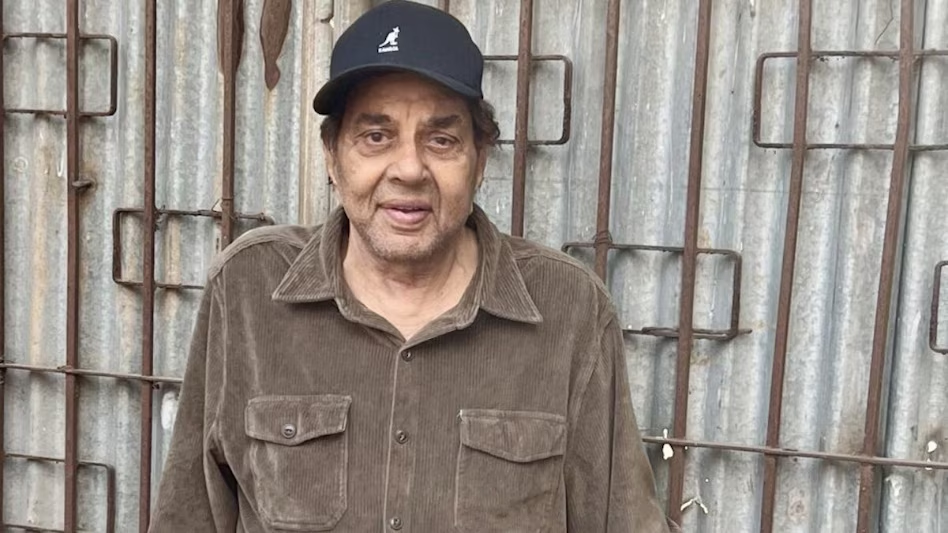
Dharmendra Singh Deol, popularly known simply as Dharmendra, is one of the greatest figures in the history of Indian cinema. Often called the “He-Man of Bollywood,” he is celebrated for his charming screen presence, natural acting, romantic personality, and unmatched versatility. His career spans more than six decades, making him one of the longest-serving and most loved actors in India. Born in 1935, he rose from a simple village background to become a national superstar, a producer, a politician, and a respected elder in the Indian film industry. His life story is not just the journey of a film star; it is a tale of dedication, hard work, resilience, and timeless popularity.
Early Life and Background
Dharmendra was born on December 8, 1935, in Nasrali, a small village in Ludhiana district of Punjab, British India. His full name at birth was Dharam Singh Deol. His father, Kewal Kishan Singh Deol, was a schoolteacher, and his mother, Satwant Kaur, was a homemaker. His family lived a simple, traditional Punjabi lifestyle, where values like honesty, discipline, and kindness were deeply respected. Dharmendra grew up in the nearby village of Sahnewal, where he spent most of his childhood.
From his early days, he was known to be shy, soft-spoken, and very polite. As a young boy, he had a strong attachment to the natural beauty of Punjab—the green fields, rivers, and village culture. This simple upbringing influenced his personality throughout his life. Dharmendra often says that no matter how big a star he became, he always felt like the “Jat boy from Punjab.”
He completed his schooling from Government Senior Secondary School, Lalton Kalan, and later graduated from Ramgarhia College, Phagwara. Though he was not academically inclined, he was always passionate about movies. He loved watching Hollywood stars such as Dilip Kumar, Gregory Peck, and Spencer Tracy, and often imagined himself on the big screen.
Journey to Stardom: The Early Struggles
Like many dreamers of the 1950s, Dharmendra wanted to go to Mumbai (then Bombay) to try his luck in films. In 1958, he saw an advertisement for the Filmfare Talent Contest, a nationwide search for new actors. Excited by the opportunity, he mailed his photographs. His rugged looks, tall physique, and natural charm impressed the judges, and he was selected.
In 1960, he reached Bombay with almost no money but a heart full of ambition. The early days were difficult. He visited studios, met directors, waited outside offices, and lived in simple conditions. Despite the struggles, he never lost hope. His dedication paid off when he got his first break in the film:
Dil Bhi Tera, Hum Bhi Tere (1960)
This film marked the beginning of his career. Though it did not become a major success, Dharmendra received appreciation for his sincerity and natural performance.
Over the next few years, he slowly became recognized for his expressive eyes, calm personality, and emotional depth. He was often compared to Dilip Kumar for his serious roles.
Rise to Fame: 1960s
The 1960s were the turning point of Dharmendra’s career. He appeared in several films that showcased his romantic and dramatic abilities. Movies like:
- Anpadh (1962)
- Bandini (1963)
- Haqeeqat (1964)
- Mamta (1966)
- Phool Aur Paththar (1966)
- Devar (1966)
“Phool Aur Paththar” became a tremendous hit. It was his first major success as a leading hero and gave him the title of the He-Man of Bollywood because of his strong, masculine screen image. This success changed everything—he became a sought-after actor and one of the top romantic heroes of the decade.
Another important aspect of his career in the 1960s was the beginning of his legendary pairing with Meena Kumari, one of the greatest actresses of Indian cinema. Their films were admired for their emotional intensity, and Dharmendra’s popularity skyrocketed.
Dominating the 1970s: Peak of Stardom
The 1970s is considered the golden phase of Dharmendra’s career. During this decade, he acted in some of the most iconic movies in Bollywood history. He became famous for action roles, comedy, romance, and family dramas—all at the same time.
Sholay (1975)
If one film defines Dharmendra’s stardom, it is Sholay. His portrayal of Veeru, a humorous yet brave dacoit-fighter, remains one of the most loved characters in Indian cinema. The chemistry between Dharmendra and Hema Malini in the film became legendary.
Other major films of the 1970s include:
- Yaadon Ki Baaraat (1973)
- Chupke Chupke (1975)
- Dharam Veer (1977)
- Dream Girl (1977)
- Jugnu (1973)
- Shalimar (1978)
During this period, Dharmendra proved that he was not only an action hero but also a fantastic comedian. His performance in Chupke Chupke, especially, is remembered as one of the best comedic performances in Hindi cinema.
Partnership with Hema Malini
One of the biggest chapters in Dharmendra’s life is his relationship with Hema Malini, the “Dream Girl” of Bollywood. They worked together in over 40 films, creating one of the most successful on-screen pairs in Hindi cinema. Their chemistry was natural, elegant, and deeply admired by fans.
Off-screen, their relationship grew stronger, and they eventually got married in 1980. Their love story is considered one of the most talked-about relationships in Bollywood history. Together, they have two daughters:
- Esha Deol
- Ahana Deol
Dharmendra’s first wife was Prakash Kaur, and he has four children with her:
- Sunny Deol
- Bobby Deol
- Vijeta Deol
- Ajeeta Deol
Both Sunny and Bobby Deol went on to become successful actors.
1980s–1990s: Continuing the Legacy
Dharmendra remained a major star through the 1980s and early 1990s. Although younger actors were rising in Bollywood, he continued delivering hits and powerful performances. Some of his notable films from this era include:
- Aas Paas (1981)
- Naukar Biwi Ka (1983)
- Jehreele (1989)
- Batwara (1989)
- Ghayal (1990) (as producer)
- Kshatriya (1993)
By the mid-1990s, he gradually reduced his acting work, but he stayed active as a producer. His production company, Vijayta Films, launched Sunny Deol and later Bobby Deol. Films like Betaab (1983) and Ghayal (1990) became massive hits and won awards.
Political Career
Dharmendra also entered politics. In 2004, he contested the Lok Sabha elections from Bikaner, Rajasthan, as a member of the Bharatiya Janata Party (BJP). He won the election and served as a Member of Parliament. Although he was not very active politically later, he focused mainly on social issues and rural development.
Return to Acting: 2000s Onwards
Even in his later years, Dharmendra continued to appear in selected films. His comeback roles were warmly received by the audience. Some of his notable films include:
- Apne (2007)
- Yamla Pagla Deewana (2011)
- Yamla Pagla Deewana 2 (2013)
- Second Hand Husband (2015)
- Yamla Pagla Deewana: Phir Se (2018)
- Rocky Aur Rani Ki Prem Kahani (2023)
His role in Rocky Aur Rani Ki Prem Kahani especially touched the hearts of millions. Even at an advanced age, his charm remained unchanged.
Dharmendra’s Personality and Image
Dharmendra is known for being extremely humble, emotional, and down-to-earth. Colleagues often describe him as someone who never let stardom affect his behavior. Despite his muscular image on screen, he is gentle and soft-hearted in real life.
Known traits:
- Deep love for nature and farming
- Simple lifestyle
- Respect for colleagues
- Emotional connection to fans
- Strong attachment to his Punjabi roots
In his free time, Dharmendra likes spending time on his farmhouse, growing vegetables, and taking care of animals.
Awards and Achievements
Over his long career, Dharmendra has received numerous awards and honors:
- Filmfare Lifetime Achievement Award (1997)
- Padma Bhushan (2012) – India’s third-highest civilian award
- National Film Awards (as producer for Ghayal)
- Multiple Best Actor nominations
- Recognition from state governments and film bodies
He is also listed in various rankings of the most handsome men in world cinema. His looks, especially during the 1960s–1980s, made him an international heartthrob.
Dharmendra as a Cultural Icon
Dharmendra is not just an actor—he is a cultural phenomenon. His dialogues, songs, and scenes are deeply embedded in Indian pop culture. Characters like Veeru from Sholay, Professor Parimal Tripathi from Chupke Chupke, and Sher Singh from Dharam Veer remain unforgettable.
His ability to perform romantic, emotional, comic, and action roles with equal ease makes him one of the most versatile actors ever. Generations of actors, including his own sons and grandson Karan Deol, have been inspired by him.
Legacy
Dharmendra’s legacy is rich and enduring:
- Over 300 films across six decades
- A major figure in shaping Bollywood’s action and romance genres
- A loving father who helped launch the careers of Sunny and Bobby
- A respected elder admired by actors across generations
- A beloved icon in both urban and rural India
Even today, when Dharmendra appears on screen, people of all ages feel connected to him. His contribution to Indian cinema is unmatched, and his timeless appeal continues to inspire millions.
Conclusion
Dharmendra Singh Deol’s life is a remarkable journey from a small Punjabi village to becoming one of the greatest stars in Indian cinema. His story represents hard work, sincerity, and the power of dreams. With a career spanning over sixty years, he has given unforgettable performances, created iconic characters, and left a permanent mark on the hearts of audiences. Whether as an actor, producer, or family man, Dharmendra remains a symbol of warmth, charm, and Indian cinema’s golden era.
