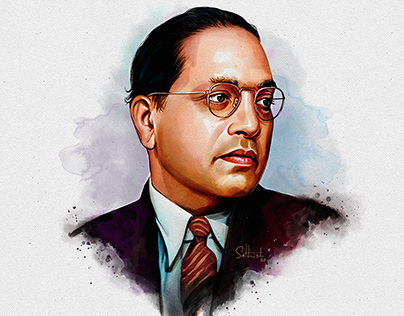
Mahaparinirvan Diwas is observed every year on 6 December to honor the death anniversary of Dr. Bhimrao Ramji Ambedkar, one of India’s greatest social reformers, jurists, economists, and the chief architect of the Indian Constitution. The day holds deep emotional, cultural, and historical significance, especially for Dalit communities, followers of Buddhism, and all those who value equality, justice, and human dignity. The word “Mahaparinirvan” is derived from Buddhist philosophy, referring to the ultimate state of liberation attained after death by someone who has reached enlightenment. Dr. Ambedkar embraced Buddhism on 14 October 1956, and when he passed away on 6 December the same year, his followers began remembering this day as Mahaparinirvan Diwas.
Dr. B.R. Ambedkar devoted his entire life to fighting social discrimination, untouchability, and inequality. He believed that real freedom could not be achieved unless every individual had access to education, economic opportunities, and social dignity. Born into a marginalized Mahar family, he experienced discrimination firsthand, which strengthened his resolve to transform Indian society. Through his writings, movements, and visionary leadership, he challenged centuries-old social hierarchies and worked toward building a more inclusive nation.
Mahaparinirvan Diwas is not only a day of mourning but also a day of reflection and inspiration. Every year, millions of people gather at Chaitya Bhoomi in Dadar, Mumbai, where Dr. Ambedkar was cremated. Followers pay tribute by offering flowers, chanting Buddhist prayers, reading from the Dhamma, and participating in social awareness activities. Government institutions, universities, and civil society organizations also organize seminars, discussions, and cultural programs to highlight Dr. Ambedkar’s contributions to democracy, social justice, and human rights.
On this day, people revisit his guiding principles — “Educate, Agitate, Organize” — which continue to inspire new generations to challenge discrimination and promote equality. His emphasis on the annihilation of caste, gender equality, economic empowerment, constitutional rights, and scientific thinking has shaped modern India in profound ways. Dr. Ambedkar’s vision of a society free from oppression remains deeply relevant even today, as issues of social inequality, economic disparity, and injustice persist.
Mahaparinirvan Diwas also encourages people to renew their commitment to the values enshrined in the Indian Constitution. Dr. Ambedkar believed that political democracy must be supported by social and economic democracy. He consistently reminded citizens that rights come with duties and that the future of India depends on maintaining liberty, equality, and fraternity.
In essence, Mahaparinirvan Diwas is a reminder of Dr. Ambedkar’s extraordinary legacy. It calls on every citizen to uphold the ideals he lived and fought for. The day inspires reflection on how far society has progressed and how much work still needs to be done to create a just and equal nation. Through remembrance and action, Mahaparinirvan Diwas keeps alive the transformative spirit of a leader who dedicated his life to empowering the oppressed and strengthening the foundation of Indian democracy.
