
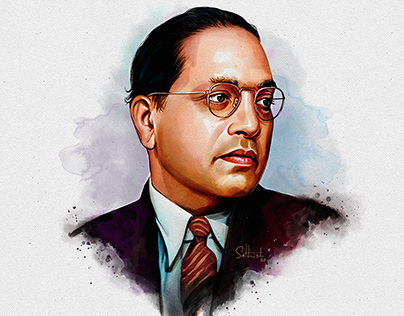
Dr. B. R. Ambedkar (Bhimrao Ramji Ambedkar) was one of India’s greatest leaders, known for his work as a social reformer, economist, jurist, and the chief architect of the Indian Constitution. He was born on 14 April 1891 in Mhow (present-day Madhya Pradesh) in a Dalit (then called “untouchable”) family. Because of caste discrimination, he suffered many hardships in childhood—he faced exclusion in school, was denied basic facilities, and was often humiliated. These experiences shaped his lifelong mission to fight for equality, justice, and human rights.Ambedkar was exceptionally intelligent. He became one of the most educated Indians of his time. He completed his higher studies in the United States, the United Kingdom, and Germany, earning degrees like M.A., Ph.D., D.Sc., and Bar-at-Law. His studies in economics, law, and political science helped him understand how societies function and how oppressed groups can be uplifted.Throughout his life, Dr. Ambedkar worked to eliminate the caste system. He strongly opposed discrimination and believed that education was the key to empowerment. He started newspapers like Mooknayak and Bahishkrit Bharat to spread awareness. He organized movements for the rights of Dalits, such as the Mahad Satyagraha (for the right to access public water) and the Kalaram Temple Entry Movement. His efforts inspired millions and created a nationwide push for social change.In 1947, after India gained independence, Ambedkar was appointed Chairman of the Drafting Committee of the Indian Constitution. He played the biggest role in shaping the Constitution’s principles—equality before law, fundamental rights, prohibition of discrimination, protection of minorities, and upliftment of weaker sections. His vision made India a democratic, secular, and socially just nation.As the first Law Minister of India, Ambedkar also worked to improve laws related to marriage, inheritance, and women’s rights through the Hindu Code Bill. Although the bill faced opposition, it later influenced many reforms that strengthened gender equality in India.Towards the end of his life, Ambedkar converted to Buddhism along with lakhs of followers in 1956, believing Buddhism taught equality and compassion. He passed away on 6 December 1956, but his legacy continues to inspire movements for social justice.Dr. B. R. Ambedkar is remembered as the Father of the Indian Constitution, a champion of the oppressed, and one of the most influential nation-builders of modern India. His message—“Educate, Agitate, Organize”—remains powerful even today.

Author: Utkarsh_bauddh
Hello! I am Utkarsh Bauddh.