The sinking of the RMS Titanic on 15 April 1912 is one of the most tragic and iconic maritime disasters in human history. More than just the loss of a ship, it became a symbol of human ambition, technological pride, and the limits of early 20th-century engineering. The disaster reshaped global maritime laws, influenced countless books, documentaries, and films, and left behind an unforgettable story of heroism, class division, and human error.
1. Background: A Ship Built to Be “Unsinkable”
In the early 1900s, transatlantic travel was booming. European immigrants were crossing to America in huge numbers, and shipping companies competed fiercely to build the biggest, safest, and most luxurious ships. The White Star Line, a major British company, wanted to dominate this market. In response, it commissioned three massive ocean liners:
- RMS Olympic
- HMHS Britannic
- RMS Titanic
Among these, Titanic was the crown jewel. Built at Harland and Wolff shipyard in Belfast, construction began in 1909 and took nearly three years. Titanic was 882 feet long, nine decks high, and weighed 46,000 tons. The ship featured luxury unmatched at the time—grand staircases, swimming pools, Turkish baths, smoking rooms, libraries, and ornate dining halls.
But what truly captured the public’s imagination was the belief that Titanic was “unsinkable.” Newspapers called it “the ship that even God could not sink.” This myth came from its advanced safety features:
- 16 watertight compartments
- Electric closing doors to prevent flooding
- Double-bottom hull
However, a crucial flaw existed: the watertight bulkheads did not extend high enough. If multiple compartments flooded, the water would simply spill over from one to another like water in a series of open tubs.
2. The Voyage Begins (10 April 1912)
Titanic began her maiden voyage from Southampton, England, on 10 April 1912, with stops at:
- Cherbourg, France
- Queenstown (now Cobh), Ireland
After picking up passengers, she set off toward New York with around 2,208 people onboard—about 1,317 passengers and 891 crew members.
The passengers were divided into three classes:
First Class
Filled with some of the world’s wealthiest people—business tycoons, socialites, and elites. They enjoyed unmatched luxury.
Second Class
Professionals, teachers, and tourists. Their facilities were equivalent to first class on many other ships.
Third Class
Mostly immigrants traveling to America in search of a better life. Their cabins were basic but cleaner and safer than most ships of the time.
The atmosphere onboard was festive. Passengers enjoyed fine dining, live music, and calm seas. Captain Edward Smith, one of the most experienced captains in the world, was in command. Many believed nothing could go wrong.
3. Warnings Ignored
During the voyage, Titanic received multiple iceberg warnings from other ships sailing the same route. At least six warnings were sent, but not all reached the bridge, partly because the wireless operators were busy transmitting personal messages for passengers.
On 14 April 1912, the day of the disaster, the sea was unusually calm—almost like glass. This made spotting icebergs harder because waves, which normally break against ice, were absent.
Despite warnings, Titanic maintained a speed of 22 knots—close to its maximum. The belief in its safety, combined with pressure to maintain schedule, played a major role in the coming tragedy.
4. The Collision (11:40 PM, 14 April 1912)
At 11:40 PM, lookout Frederick Fleet spotted a dark shape directly ahead—a massive iceberg. He rang the warning bell and telephoned the bridge: “Iceberg, right ahead!”
First officer William Murdoch ordered:
- Hard to starboard (turn left)
- Full reverse on the engines
The ship slowly began to turn, but the iceberg brushed along the starboard side, creating a series of punctures. Instead of one long gash, the iceberg caused five separate ruptures, spread across six compartments.
Titanic could survive the flooding of four compartments. But six meant inevitable doom.
Water rushed in rapidly. Estimates suggest 400 tons of water entered every minute.
5. The Grim Realization
Thomas Andrews, the ship’s designer, inspected the damage and delivered the devastating assessment:
“She will sink. It is a mathematical certainty.”
He predicted that the ship had about 1 hour and 30 minutes, though Titanic ultimately stayed afloat for 2 hours and 40 minutes after the collision.
Captain Smith ordered distress signals to be sent out. Titanic’s operators sent the traditional CQD distress call and later also used the newer SOS signal.
Nearby ships received the signals, but most were too far away—except one.
Unfortunately, the closest ship, SS Californian, was only about 20 miles away but had turned off its wireless radio for the night. Its crew saw Titanic’s distress flares but did not respond.
6. The Lifeboat Problem
Titanic carried 20 lifeboats, enough for 1,178 people. However, more than 2,200 people were on board.
This was legal at the time because outdated laws required lifeboats based on ship tonnage, not passenger capacity.
Even worse, many lifeboats launched half-empty due to panic, confusion, and lack of training.
Example:
- Lifeboat 1 had a capacity of 40 people
- It launched with only 12
Officers feared that fully loaded boats might break during lowering.
7. Evacuation Chaos and Class Divide
The order “women and children first” was enforced differently across the ship.
First Class:
Evacuated first. Many reached the lifeboats easily due to proximity.
Second Class:
Received delayed instructions.
Third Class:
Faced locked gates, complex corridors, and poor communication. Many never reached the boat deck.
8. Heroism and Tragedy at Sea
Numerous acts of bravery were recorded.
The Band
Titanic’s musicians continued playing to calm passengers. Their final song is believed to be “Nearer, My God, to Thee.” All eight musicians died.
Captain Smith
Stayed on the bridge and went down with the ship, following maritime tradition.
Thomas Andrews
Spent his final moments helping passengers, urging them to wear lifejackets.
Marconi Wireless Operators
John Phillips and Harold Bride kept sending distress signals until the last moment.
9. The Final Moments
By 2:00 AM, Titanic was severely tilted. Water flooded the bow, and the stern rose high into the air.
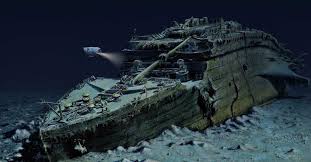
At 2:18 AM, the ship broke in two—a fact confirmed only after the wreck was found in 1985. The bow sank first, followed by the stern, which settled underwater more slowly.
At approximately 2:20 AM, Titanic disappeared beneath the surface of the North Atlantic.
10. The Freezing Water
The water temperature was –2°C (28°F). Most people who fell into the water died within 15 minutes due to hypothermia.
Only two lifeboats returned to pull survivors from the water—by that time, most had died.
11. Rescue by Carpathia
At 4:00 AM, more than an hour after Titanic sank, the RMS Carpathia reached the scene. Captain Arthur Rostron pushed his ship through dangerous ice fields to reach survivors as fast as possible.
Carpathia rescued 706 survivors, mostly women and children.
12. The Aftermath
The world reacted with shock and anger.
Key changes in maritime laws included:
- Ships must carry lifeboats for all passengers
- Continuous 24-hour radio watches
- Formation of the International Ice Patrol
- Improved lifeboat drill requirements
The disaster became a turning point in maritime safety.
13. Discovery of the Wreck (1985)
The Titanic wreck was discovered in 1985 by Robert Ballard, lying about 12,500 feet underwater. The ship was split into two main sections, surrounded by thousands of artifacts.
Images of the wreck reignited global interest and inspired books, museums, and movies.
14. Cultural Impact
The Titanic story became part of global memory. Films like James Cameron’s “Titanic” (1997) introduced the tragedy to a new generation. The ship came to symbolize:
- Human pride
- Technological limits
- Class inequality
- Bravery and self-sacrifice
- The fragility of life
15. Why the Titanic Still Matters
More than a century later, Titanic remains captivating because:
- It shows what happens when human confidence exceeds caution
- It reveals inequality between rich and poor
- It demonstrates heroism and humanity in crisis
- It changed global safety laws
Most importantly, its story feels deeply personal because it reflects real people, real dreams, and real loss.
