Utkarsh_bauddh
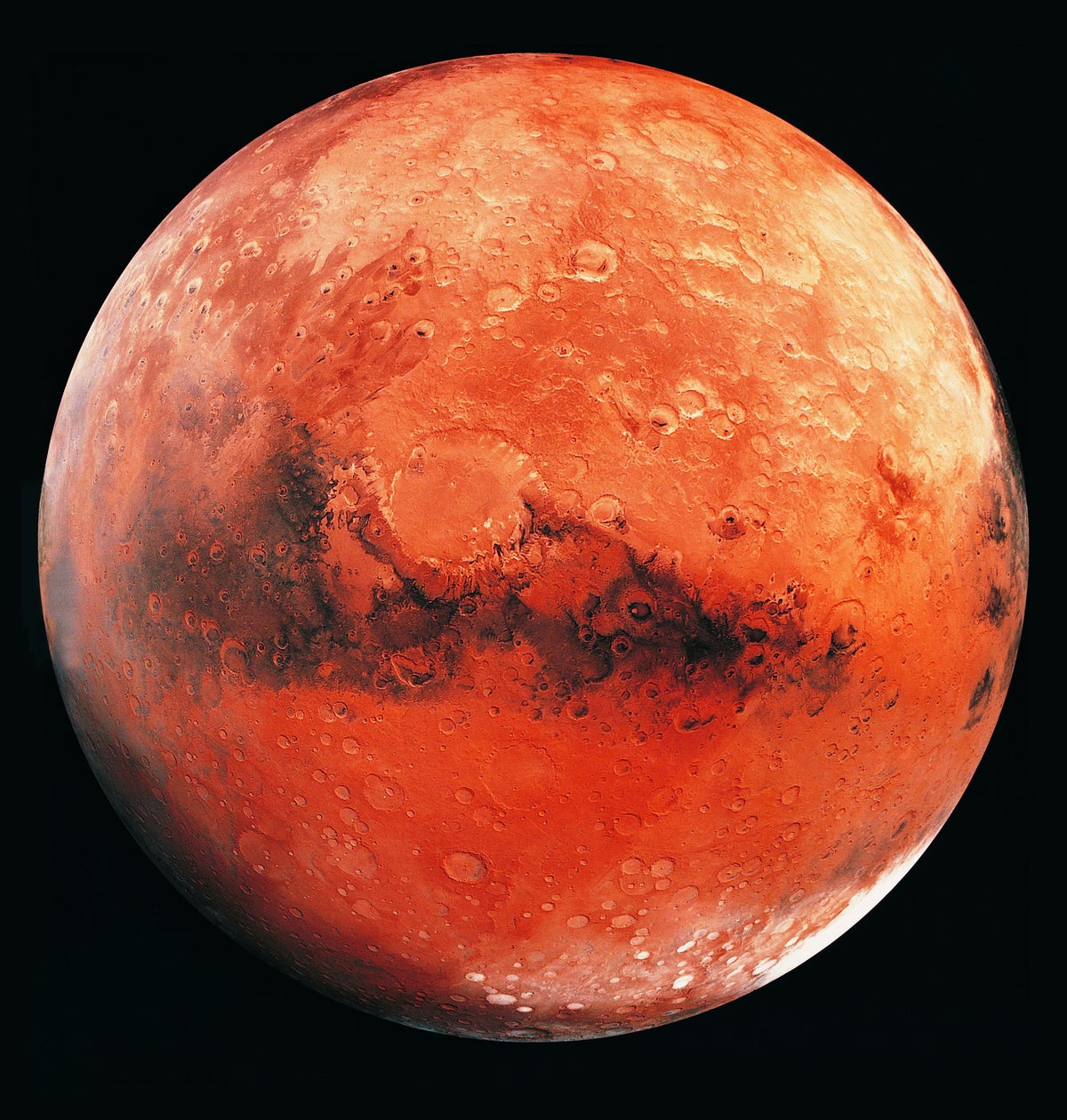
Mars is called the Red Planet because of its distinct reddish appearance, which can be easily seen from Earth with the naked eye. This red color is caused by the presence of iron oxide, commonly known as rust, on the surface of the planet. Just as iron rusts on Earth when it reacts with oxygen and water, the iron-rich rocks and dust on Mars have oxidized over billions of years, giving the planet its characteristic red hue.
Mars is the fourth planet from the Sun in our solar system, after Mercury, Venus, and Earth. It is smaller than Earth, with about half of Earth’s diameter, which is why it is sometimes called Earth’s “sister planet” or “neighbor.” Despite its smaller size, Mars has many features similar to Earth, such as mountains, valleys, deserts, and polar ice caps.
One of the most famous features of Mars is Olympus Mons, the largest volcano in the solar system. It is about three times taller than Mount Everest. Mars also has a vast canyon system called Valles Marineris, which is much longer and deeper than the Grand Canyon on Earth. These features suggest that Mars was once geologically active.
Scientists believe that Mars may have had liquid water on its surface in the distant past. Evidence such as dried riverbeds, lake-like formations, and minerals that form in the presence of water supports this idea. Because water is essential for life, Mars has become a major focus of scientific research to determine whether it ever supported microbial life.
Mars has a thin atmosphere, made mostly of carbon dioxide, which cannot retain much heat. As a result, the planet is very cold, with average temperatures around minus 60 degrees Celsius. Dust storms are common on Mars, and some can grow so large that they cover the entire planet.
In modern times, Mars has been explored by several space missions, including rovers like Spirit, Opportunity, Curiosity, and Perseverance. These missions aim to study the planet’s surface, climate, and potential for future human exploration.
In conclusion, Mars is called the Red Planet due to its iron-rich, rust-covered surface. Its unique features, possible history of water, and proximity to Earth make it one of the most fascinating planets in our solar system.

Author: Utkarsh_bauddh
Hello! I am Utkarsh Bauddh.