Gulsan_gautam
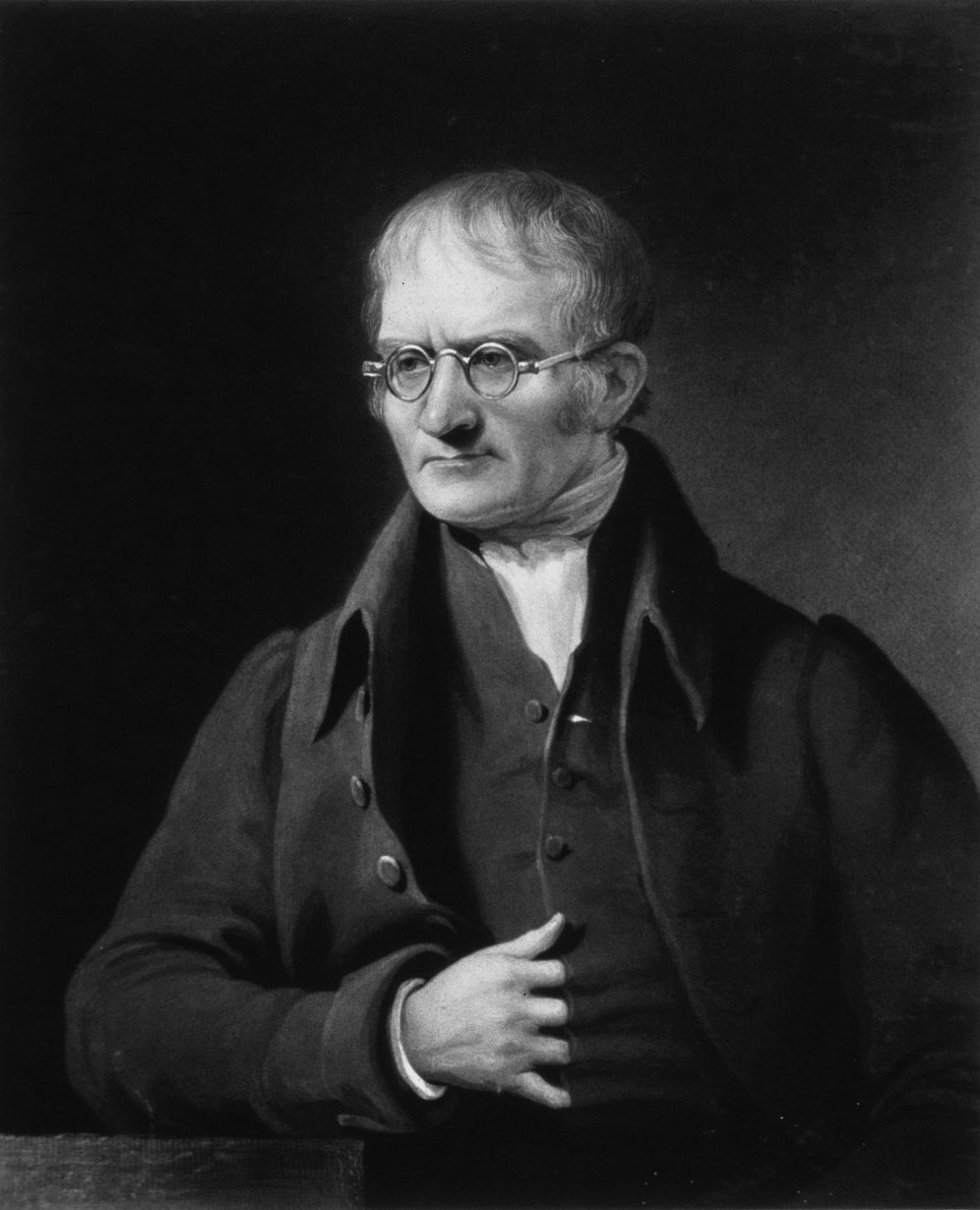
Dalton’s Atomic Theory is one of the earliest scientific explanations of the structure of matter. It was proposed by John Dalton, an English chemist, in 1808. This theory laid the foundation of modern chemistry by explaining how matter is made and how chemical reactions occur.
According to Dalton, all matter is made up of extremely small particles called atoms. These atoms are so tiny that they cannot be seen with the naked eye. He believed that atoms are the basic building blocks of all substances and cannot be divided, created, or destroyed by chemical means.
Dalton’s theory has several important postulates.
First, all matter is composed of atoms, which are indivisible and indestructible.
Second, atoms of the same element are identical in mass, size, and properties, while atoms of different elements are different from each other.
Third, atoms combine in simple whole-number ratios to form compounds. For example, water is formed when hydrogen and oxygen combine in a fixed ratio.
Fourth, chemical reactions involve the rearrangement of atoms, not their creation or destruction. This explains why mass is conserved in chemical reactions.
Dalton also introduced the idea that each element has its own unique type of atom. This helped scientists understand why substances show different physical and chemical properties. His theory explained laws such as the Law of Conservation of Mass and the Law of Definite Proportions, which were already known but not fully understood.
However, with the progress of science, some parts of Dalton’s theory were found to be incorrect. Later discoveries showed that atoms are divisible and contain smaller particles like electrons, protons, and neutrons. Also, atoms of the same element may have different masses, known as isotopes. Despite these limitations, Dalton’s theory remains extremely important because it formed the base of modern atomic theory.
In conclusion, Dalton’s Atomic Theory was a revolutionary idea that changed the understanding of matter. Though modified by later discoveries, its core concepts still play a vital role in chemistry today.Dalton’s Atomic Theory is one of the earliest scientific explanations of the structure of matter. It was proposed by John Dalton, an English chemist, in 1808. This theory laid the foundation of modern chemistry by explaining how matter is made and how chemical reactions occur.
According to Dalton, all matter is made up of extremely small particles called atoms. These atoms are so tiny that they cannot be seen with the naked eye. He believed that atoms are the basic building blocks of all substances and cannot be divided, created, or destroyed by chemical means.
Dalton’s theory has several important postulates.
First, all matter is composed of atoms, which are indivisible and indestructible.
Second, atoms of the same element are identical in mass, size, and properties, while atoms of different elements are different from each other.
Third, atoms combine in simple whole-number ratios to form compounds. For example, water is formed when hydrogen and oxygen combine in a fixed ratio.
Fourth, chemical reactions involve the rearrangement of atoms, not their creation or destruction. This explains why mass is conserved in chemical reactions.
Dalton also introduced the idea that each element has its own unique type of atom. This helped scientists understand why substances show different physical and chemical properties. His theory explained laws such as the Law of Conservation of Mass and the Law of Definite Proportions, which were already known but not fully understood.
However, with the progress of science, some parts of Dalton’s theory were found to be incorrect. Later discoveries showed that atoms are divisible and contain smaller particles like electrons, protons, and neutrons. Also, atoms of the same element may have different masses, known as isotopes. Despite these limitations, Dalton’s theory remains extremely important because it formed the base of modern atomic theory.
In conclusion, Dalton’s Atomic Theory was a revolutionary idea that changed the understanding of matter. Though modified by later discoveries, its core concepts still play a vital role in chemistry today.

Author: Gulsan_gautam
I am gulsan gautam.