Introduction
Modern physics has repeatedly challenged the idea that reality is simple and singular. From quantum mechanics to cosmology, scientists have discovered that the universe behaves in ways that defy everyday intuition. One of the most fascinating ideas to emerge from this exploration is the multiverse—the possibility that our universe is only one among countless others. Building on this concept, the Multiverse Echo Theory is a hypothetical framework that proposes a subtle but profound idea: events, structures, and consciousness in our universe may carry faint “echoes” of similar events occurring in parallel universes.
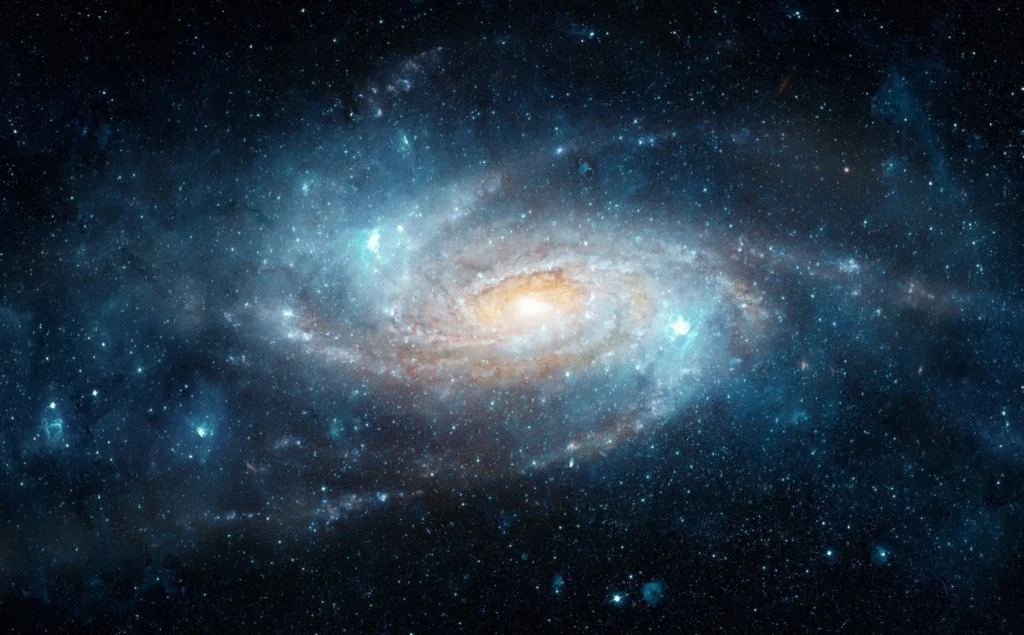
The Multiverse Echo Theory does not claim direct travel between universes. Instead, it suggests that information, probabilities, or patterns can resonate across universes through deep quantum and cosmological connections. These echoes might influence physical constants, human intuition, unexplained coincidences, and even the evolution of reality itself. Though speculative, the theory aims to unify ideas from quantum physics, string theory, and information theory into a single conceptual model.
Foundation of the Multiverse Concept
To understand Multiverse Echo Theory, one must first understand the idea of the multiverse itself. Several scientific models already suggest the existence of multiple universes:
- Quantum Many-Worlds Interpretation
Every quantum decision creates branching realities, each representing a different outcome. - Cosmic Inflation Multiverse
Rapid inflation after the Big Bang may have created many bubble universes, each with different physical laws. - String Theory Landscape
String theory predicts an enormous number of possible vacuum states, each corresponding to a unique universe.
Multiverse Echo Theory does not replace these models. Instead, it proposes a linking mechanism among them—an echo-like interaction that allows universes to subtly influence one another without direct contact.
What Is an “Echo” in This Theory?
In classical physics, an echo is a reflection of sound waves. In Multiverse Echo Theory, an echo is not sound, but a residual imprint of information.
An echo can be understood as:
- A probability shift
- A pattern repetition
- A quantum resonance
- An informational shadow
When a major event occurs in one universe—such as the formation of galaxies, emergence of life, or collapse of a quantum state—it generates a disturbance in the multiversal information field. This disturbance weakens as it spreads, but traces of it may appear in nearby universes as statistical tendencies rather than exact copies.
Thus, universes do not mirror each other perfectly. They rhyme, much like echoes do.
The Multiversal Information Field
At the heart of the theory lies the concept of a Multiversal Information Field (MIF). This hypothetical field exists beyond space and time and stores all possible informational states of reality.
Key properties of the MIF:
- It is non-local (not confined to one universe)
- It operates at a pre-spacetime level
- It connects quantum information across universes
- It preserves patterns, not details
According to the theory, universes are not isolated bubbles but nodes within this vast informational network. When information changes in one node, it slightly alters the probability landscape of others.
Quantum Resonance and Echo Formation
Quantum mechanics already shows us that particles can be entangled across distance. Multiverse Echo Theory extends this idea across universes.
The theory proposes cross-universal quantum resonance, meaning:
- Similar quantum structures across universes can resonate
- Resonance increases when universes share similar physical laws
- High-energy or high-complexity events produce stronger echoes
For example, if intelligent life emerges in many universes under similar conditions, the probability of intelligence emerging elsewhere increases—not because of causation, but because of resonance within the multiversal field.
Echoes and Physical Constants
One of the biggest mysteries in physics is why fundamental constants (such as the speed of light or gravitational strength) have values perfectly suited for life.
Multiverse Echo Theory offers an explanation:
- Universes with stable, long-lasting structures produce strong informational echoes
- These echoes bias neighboring universes toward similar stable constants
- Over time, universes with chaotic constants fade, while stable ones dominate the echo field
This creates a self-reinforcing selection effect, without invoking design or coincidence.
Echoes and Consciousness
A controversial but intriguing part of the theory concerns consciousness.
The theory suggests that consciousness is not confined to a single universe but is an emergent pattern that resonates across multiple realities.
Possible implications:
- Déjà vu may be weak alignment between similar conscious states
- Intuition could reflect probability echoes from alternate outcomes
- Creativity may involve accessing broader informational patterns
This does not mean memories travel between universes. Instead, similar brain structures tuned to similar problems may pick up comparable solutions due to multiversal resonance.
Explaining Coincidences and “Near-Miss” Events
People often experience events where improbable outcomes narrowly occur—missed accidents, unexpected meetings, or repeated patterns in life.
Multiverse Echo Theory interprets this as:
- Multiple universes exploring nearby probability paths
- Strong outcomes in one universe creating probability pressure in others
- The observer experiencing the most stable or resonant outcome
Thus, reality may feel “guided” not by fate, but by statistical reinforcement across universes.
Time, Causality, and Echo Delay
Echoes are not instantaneous. The theory proposes temporal diffusion, meaning echoes spread slowly through the multiversal information field.
As a result:
- Past events may influence distant futures in other universes
- Some echoes may appear as historical patterns
- Others may bias future developments
This avoids paradoxes and preserves local causality within each universe.
Testability and Scientific Challenges
The greatest weakness of Multiverse Echo Theory is testability. Direct observation of other universes is currently impossible.
However, the theory suggests indirect signs:
- Statistical anomalies in quantum experiments
- Unexplained correlations in cosmological constants
- Pattern repetition beyond chance in complex systems
Future advances in quantum gravity and information physics may allow partial testing.
Philosophical Implications
If Multiverse Echo Theory is even partially correct, it reshapes how we understand reality.
Key implications:
- Reality is participatory, not isolated
- Existence is probabilistic but structured
- Individual actions contribute to larger informational patterns
- Meaning arises from resonance, not uniqueness
In this view, every choice strengthens certain echoes and weakens others.
Conclusion
The Multiverse Echo Theory is a bold, speculative attempt to explain deep mysteries of physics, consciousness, and probability under one conceptual framework. By proposing that universes subtly influence one another through informational resonance, the theory bridges quantum mechanics, cosmology, and philosophy.
While not yet a scientific theory in the strict experimental sense, it serves as a powerful intellectual model. It reminds us that reality may be far richer, more interconnected, and more poetic than our current understanding allows. Whether future science confirms or refutes it, the Multiverse Echo Theory expands the boundaries of how we imagine existence itself.
