Kalpana Chawla was a remarkable astronaut, aerospace engineer, and an inspiring symbol of determination, courage, and scientific excellence. She became the first woman of Indian origin to travel into space, achieving a dream that millions of people across the world admire even today. Her life story is not only about space exploration but also about perseverance, education, and the power of dreams. Kalpana Chawla proved that with hard work and dedication, even the sky is not the limit.
Early Life and Childhood
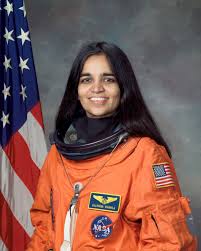
Kalpana Chawla was born on 17 March 1962 in Karnal, a small town in the state of Haryana, India. She was the youngest of four children in her family. Her father, Banarasi Lal Chawla, was a businessman, and her mother, Sanjyothi, was a homemaker. From an early age, Kalpana showed curiosity about the world around her.
As a child, she was fascinated by airplanes, stars, and the vast sky. She often visited local flying clubs and airfields near her hometown, where she would watch aircraft taking off and landing. These early experiences deeply influenced her imagination. While many people around her followed traditional career paths, Kalpana dreamed of flying beyond the Earth.
During her school years, she was an intelligent and disciplined student. She loved science and mathematics, and her teachers recognized her sharp mind and dedication. Even though opportunities for girls in science were limited at that time, Kalpana never allowed social barriers to restrict her ambitions.
Education and Academic Excellence
After completing her schooling in Karnal, Kalpana Chawla pursued a degree in Aeronautical Engineering from Punjab Engineering College (PEC) in Chandigarh. This choice itself was unusual, especially for a woman in India during the 1980s. She worked extremely hard and graduated with distinction.
Her passion for aerospace studies encouraged her to move abroad for higher education. In 1982, she went to the United States, where she earned a Master’s degree in Aerospace Engineering from the University of Texas at Arlington. She later completed her PhD in Aerospace Engineering from the University of Colorado Boulder in 1988.
Her doctoral research focused on computational fluid dynamics, a complex area that studies the behavior of air and gases around objects such as aircraft and spacecraft. Her academic journey reflected her commitment to knowledge and innovation.
Professional Career Before NASA
After completing her education, Kalpana Chawla worked as a research scientist and later as a vice president at Overset Methods, Inc., a company involved in advanced aerospace research. She contributed significantly to studies related to aerodynamics, aircraft design, and space vehicle simulations.
In 1994, Kalpana joined NASA’s Ames Research Center, where she worked on simulations of airflow around spacecraft and aircraft. Her technical skills, creativity, and discipline made her stand out among her peers. Her work played a role in improving the safety and efficiency of space missions.
Selection as an Astronaut
Kalpana Chawla’s lifelong dream was to become an astronaut, and in 1994, she applied to NASA’s astronaut program. After a rigorous selection process involving physical tests, technical evaluations, and psychological assessments, she was selected as an astronaut candidate in 1995.
She completed her astronaut training in 1996, which included learning spacecraft systems, spacewalking techniques, survival training, and robotic operations. Her selection was historic, as she became the first Indian-born woman astronaut to be chosen by NASA.
First Space Mission: STS-87
Kalpana Chawla made her first journey into space in 1997 aboard the Space Shuttle Columbia, mission STS-87. During this mission, she served as a mission specialist and primary robotic arm operator.
The mission lasted 16 days, during which the crew conducted scientific experiments and tested new technologies. Kalpana operated the shuttle’s robotic arm to deploy and retrieve satellites. This mission marked a proud moment for India and inspired countless young students, especially girls, to pursue careers in science and space exploration.
Life as an Astronaut and Inspiration to the World
Kalpana Chawla was not only a brilliant scientist but also a humble and kind individual. She often spoke to students in India and abroad, encouraging them to follow their dreams regardless of obstacles. She believed that nationality, gender, and background should never limit ambition.
One of her most famous thoughts was that a person belongs to the entire world, not just one country. She described Earth as a beautiful planet without borders when seen from space. Her words reflected her deep sense of humanity and global unity.
Second Space Mission: STS-107
In January 2003, Kalpana Chawla went on her second space mission, again aboard Space Shuttle Columbia, mission STS-107. This mission was dedicated entirely to scientific research and experiments in microgravity.
The crew conducted more than 80 experiments related to biology, physics, and material science. Kalpana worked extensively on experiments involving fluid dynamics and combustion. The mission lasted 16 days and was considered highly productive.
The Columbia Disaster
Tragically, on 1 February 2003, during re-entry into Earth’s atmosphere, the Space Shuttle Columbia disintegrated, killing all seven crew members, including Kalpana Chawla. The disaster shocked the entire world.
Investigations later revealed that damage to the shuttle’s wing during launch led to the accident. Kalpana Chawla and her fellow astronauts were remembered as heroes who gave their lives in the pursuit of knowledge and exploration.
Legacy and Honors
After her death, Kalpana Chawla received numerous honors and tributes worldwide. Several institutions, scholarships, and awards were named after her. In India, she became a symbol of women’s empowerment and scientific aspiration.
NASA named a supercomputer after her, and her name was given to asteroids, satellites, and educational institutions. The Indian Space Research Organisation (ISRO) and many universities continue to honor her contributions.
Every year, her life story is taught in schools to inspire students to aim high and work hard. She remains a role model for aspiring astronauts, engineers, and scientists.
Importance of Kalpana Chawla in History
Kalpana Chawla’s importance lies not only in her achievements but also in what she represents. She showed that dreams have no boundaries. From a small town in India to the vastness of space, her journey was built on courage, discipline, and faith in oneself.
She broke gender stereotypes and proved that women can excel in the most challenging scientific fields. Her life encourages students to embrace education, innovation, and perseverance.
Conclusion
Kalpana Chawla’s life was short but extraordinary. She transformed her childhood dreams into reality and left an everlasting impact on the world of space science. Though she is no longer with us, her spirit continues to soar among the stars.
Her story teaches us that success comes from passion, continuous learning, and the courage to dream big. Kalpana Chawla will always be remembered as a shining star who touched the sky and inspired the world.
