Subhas Chandra Bose was one of the most courageous, dynamic, and controversial leaders of India’s freedom struggle against British colonial rule. He was popularly known as Netaji, meaning “Respected Leader.” Unlike many other leaders of his time, Bose believed that freedom could not be achieved only through non-violence and negotiations. He strongly felt that armed struggle was necessary to defeat British imperial power in India.
Subhas Chandra Bose inspired millions of Indians with his fearless personality, powerful speeches, and unshakable patriotism. His famous slogan, “Give me blood, and I will give you freedom,” reflects his revolutionary spirit and deep commitment to India’s independence. Even today, he remains a symbol of nationalism, sacrifice, and determination.
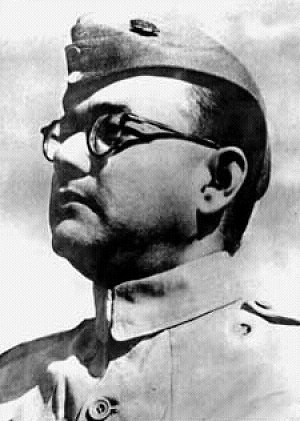
Early Life and Family Background
Subhas Chandra Bose was born on 23 January 1897 in Cuttack, in the province of Orissa (now Odisha), India. His father, Janakinath Bose, was a well-known lawyer and a respected public figure. His mother, Prabhavati Devi, was a deeply religious and disciplined woman who greatly influenced Bose’s moral values.
Subhas Chandra Bose was the ninth child in a large family of fourteen children. From an early age, he showed signs of intelligence, discipline, and leadership. He was deeply influenced by Indian spiritual traditions as well as Western philosophy. His childhood environment played a crucial role in shaping his strong sense of justice and patriotism.
Education and Intellectual Development
Subhas Chandra Bose was an exceptional student. He completed his early education at the Ravenshaw Collegiate School in Cuttack. Later, he joined Presidency College, Calcutta, where he came into conflict with British authorities after protesting against racist remarks made by a British professor. This incident showed his early resistance to colonial injustice.
He later graduated from Scottish Church College, Calcutta, with a degree in philosophy. His academic brilliance earned him a chance to study at Cambridge University in England. In 1920, he appeared for the Indian Civil Services (ICS) examination and secured the fourth rank, which was an extraordinary achievement.
However, Bose made a historic decision. He resigned from the ICS in 1921 because he believed that serving the British government was morally unacceptable while India remained enslaved. This decision shocked many but earned him immense respect among nationalists.
Entry into the Freedom Movement
After returning to India, Subhas Chandra Bose joined the Indian National Congress and became an active participant in the freedom movement. He was deeply influenced by Deshbandhu Chittaranjan Das, whom he considered his political mentor.
Bose worked as the Chief Executive Officer of the Calcutta Municipal Corporation when Chittaranjan Das was the mayor. During this period, Bose gained valuable administrative experience and became popular among the masses for his efficient governance and revolutionary ideas.
However, his radical views soon brought him into conflict with British authorities, leading to his frequent imprisonment. Despite poor health, Bose remained determined and continued his struggle for freedom.
Ideological Differences with Mahatma Gandhi
One of the most important aspects of Subhas Chandra Bose’s political life was his ideological difference with Mahatma Gandhi. While Gandhi believed in non-violence (Ahimsa) and peaceful resistance, Bose believed that force might be necessary to overthrow British rule.
Bose respected Gandhi as a leader but disagreed with his methods. He felt that the British would never leave India willingly and that a military approach, supported by international powers, was essential.
This difference became evident when Bose was elected President of the Indian National Congress in 1938 (Haripura Session) and again in 1939. After his re-election, conflicts within the Congress intensified, leading Bose to resign from the presidency.
Formation of the Forward Bloc
After leaving the Congress leadership, Subhas Chandra Bose formed a new political group called the Forward Bloc in 1939. The aim of the Forward Bloc was to unite radical and left-wing elements to intensify the freedom struggle.
The British government viewed Bose as a serious threat. He was placed under house arrest in Calcutta. However, Bose planned a daring escape that would change the course of Indian history.
The Great Escape from India
In January 1941, Subhas Chandra Bose made a dramatic escape from house arrest. Disguised as a Pathan, he traveled from Calcutta to Peshawar and then to Germany, with the help of underground networks.
This escape demonstrated his extraordinary courage, intelligence, and planning skills. Bose wanted to seek international support to weaken British power during World War II.
Role in Germany and Japan
In Germany, Bose met Adolf Hitler and sought support for India’s independence. He also formed the Free India Centre and organized the Indian Legion, composed of Indian prisoners of war.
Later, Bose traveled to Japan, where he found stronger support. With Japanese assistance, he reorganized the Indian National Army (INA), also known as the Azad Hind Fauj.
Indian National Army (INA)
The Indian National Army was originally formed by Captain Mohan Singh, but Subhas Chandra Bose transformed it into a powerful revolutionary force. The INA consisted of Indian soldiers who had been captured by the Japanese during World War II.
Bose gave the INA inspiring slogans such as:
- “Jai Hind”
- “Delhi Chalo”
He also formed the Provisional Government of Free India (Azad Hind Sarkar) in 1943, which was recognized by several countries.
Role of Women: Rani of Jhansi Regiment
One of Bose’s most progressive steps was the formation of the Rani of Jhansi Regiment, an all-women combat unit led by Captain Lakshmi Swaminathan. This was revolutionary at a time when women rarely participated in armed forces.
Bose believed strongly in gender equality and encouraged women to play an active role in nation-building.
INA’s Military Campaign
The INA fought alongside Japanese forces in Burma (Myanmar) and advanced toward India. They hoisted the Indian tricolor at Moirang in Manipur in 1944, which was a historic moment.
However, due to lack of resources, difficult terrain, and the defeat of Japan in World War II, the INA’s campaign eventually failed.
Mysterious Death of Subhas Chandra Bose
Subhas Chandra Bose reportedly died on 18 August 1945 in a plane crash in Taiwan. However, his death remains one of the greatest mysteries in Indian history. Several commissions were formed to investigate the incident, but controversy and debate continue even today.
Many Indians believe that Bose survived and lived secretly, while others accept the plane crash theory.
Legacy and Impact
Subhas Chandra Bose’s contribution to India’s freedom struggle was immense. Though the INA did not militarily defeat the British, it shook the foundations of British rule. The INA trials ignited nationalist sentiments across India and influenced the British decision to leave.
Bose is remembered as a symbol of courage, sacrifice, discipline, and revolutionary nationalism. His ideas continue to inspire the youth of India.
