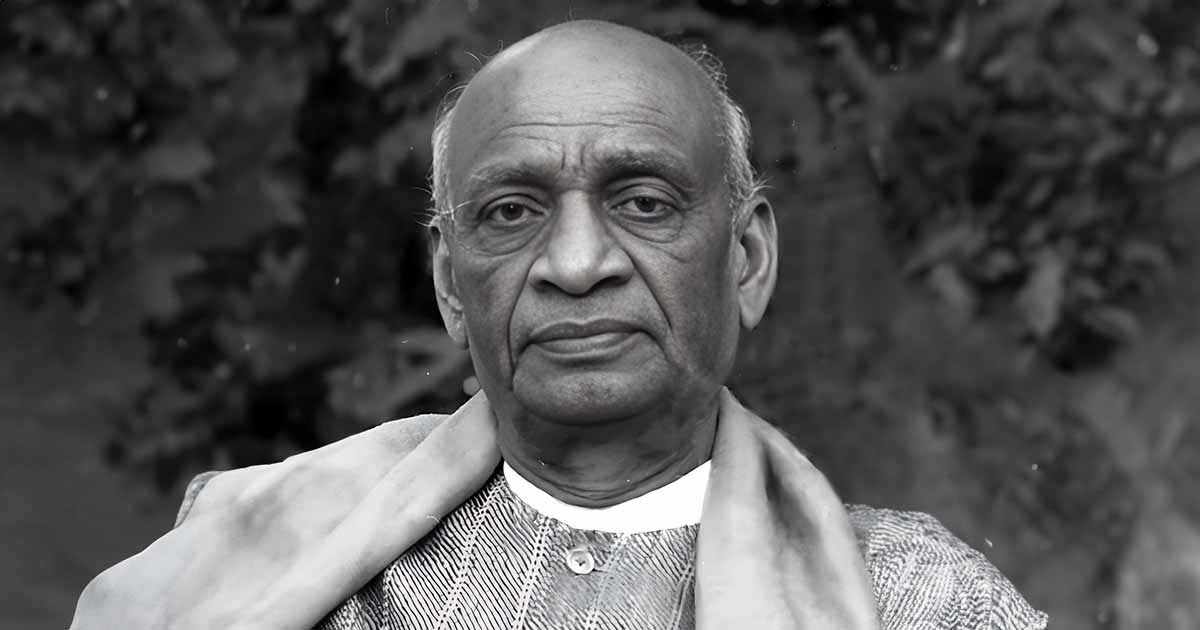
Sardar Vallabhbhhai Patel
Sardar Vallabhbhai Patel, popularly known as the “Iron Man of India,” was one of the greatest leaders of India’s freedom struggle and the chief architect of national unity after independence. His life was a remarkable journey from a simple village boy to a towering national figure who shaped the destiny of modern India. Patel’s determination, practical wisdom, and firm leadership played a decisive role in freeing India from British rule and later in integrating more than five hundred princely states into one united nation.
Early Life and Education
Vallabhbhai Patel was born on 31 October 1875 in Nadiad, Gujarat, in a modest farmer’s family. His father Jhaverbhai was a simple and hardworking man, while his mother Ladbai was deeply religious and disciplined. From childhood Patel showed qualities of courage, honesty, and independence. He completed his early education in local schools and later decided to study law. Unlike many leaders who came from privileged backgrounds, Patel struggled financially and worked with great patience to achieve his goals.
At the age of 36 he went to England to study barristership. He completed his course with excellent results and returned to India in 1913. As a lawyer in Ahmedabad he soon earned fame for his sharp intelligence and strong arguments. However, his life took a new direction when he came in contact with Mahatma Gandhi. Inspired by Gandhi’s ideals, Patel left his successful legal career and dedicated himself to the service of the nation.
Entry into the Freedom Movement
Patel’s first major participation in public life was during the Kheda Satyagraha of 1918. Farmers of Kheda district were suffering due to crop failure and heavy taxes imposed by the British government. Under Gandhi’s guidance, Patel organized the peasants and led a peaceful movement demanding tax relief. His fearless leadership forced the British authorities to accept the demands. This success made Patel a trusted lieutenant of Gandhi and a popular leader among the masses.
Another historic movement led by Patel was the Bardoli Satyagraha of 1928. The British increased land revenue despite severe economic difficulties. Patel mobilized farmers, organized volunteers, and maintained strict discipline in the agitation. The movement ended in victory, and the people of Bardoli gave him the title “Sardar,” meaning leader or chief. From this time he became known as Sardar Patel.
Role in National Politics
During the 1920s and 1930s Patel became one of the main pillars of the Indian National Congress. He participated actively in the Non-Cooperation Movement, Civil Disobedience Movement, and Quit India Movement. He was imprisoned several times but never lost his spirit. Patel believed in action more than speeches. While Gandhi represented the moral and spiritual side of the struggle, Patel provided organizational strength and administrative skill.
Patel served as the President of the Indian National Congress in 1931. He worked to strengthen party discipline and unity. Though he was a firm follower of Gandhi, he had his own practical approach. He was realistic, decisive, and sometimes strict, which balanced Gandhi’s idealism. Together they formed a powerful combination that guided the freedom movement through difficult times.
Contribution to Independence
When India moved closer to independence in the 1940s, Patel played a crucial role in negotiations with the British and other political groups. He supported the Quit India Movement of 1942 and endured long imprisonment. After World War II, when the British decided to leave India, the question of partition arose. Patel was deeply saddened by the division of the country, but he accepted it as a painful necessity to avoid civil war.
After independence on 15 August 1947, Patel became the Deputy Prime Minister and the first Home Minister of India. The new nation faced enormous problems—communal violence, refugee crisis, weak administration, and most importantly, the issue of princely states.
Integration of Princely States
Patel’s greatest achievement was the political integration of India. At the time of independence there were more than 560 princely states, each ruled by its own king. The British had given them the option to join India, Pakistan, or remain independent. If these states had stayed separate, India would have become a fragmented region like Europe. Patel understood this danger clearly.
With the help of V.P. Menon, Patel used diplomacy, persuasion, and when necessary, firmness to bring the states into the Indian Union. He appealed to the rulers’ patriotism and offered them privy purses and guarantees. Most states joined willingly, but some resisted.
The most challenging cases were Hyderabad, Junagadh, and Kashmir. Junagadh’s ruler wanted to join Pakistan despite having a Hindu majority population. Patel ordered a plebiscite, and the people chose India. In Hyderabad, the Nizam refused to join either dominion and encouraged violence. Patel launched “Operation Polo” in 1948, and the state was integrated. His strong action saved the unity of India.
Because of this historic task, Patel is rightly called the “Unifier of India.” Without his leadership, India might have broken into many small countries.
Building the Administration
Patel also laid the foundation of India’s civil services. He strongly supported the Indian Administrative Service (IAS) and called it the “steel frame of India.” He believed that a strong, impartial bureaucracy was essential for national stability. His vision helped the new government function effectively during the chaotic early years.
As Home Minister, Patel dealt firmly with communal riots and refugee rehabilitation. He worked day and night to restore law and order after partition. His practical decisions saved thousands of lives and strengthened people’s faith in the new state.
Relationship with Other Leaders
Patel had deep respect for Mahatma Gandhi and considered himself his loyal follower. Gandhi also trusted Patel completely and often relied on his judgment. With Jawaharlal Nehru, Patel had differences on some issues like Kashmir and economic policy, but both worked together for national interest. Their partnership, though sometimes tense, guided India in its formative years.
Gandhi wanted Patel to become India’s first Prime Minister, but Patel stepped aside in favor of Nehru to maintain unity within the Congress. This sacrifice showed his selflessness and commitment to collective leadership.
Personal Qualities
Sardar Patel was known for his simplicity, honesty, and discipline. He spoke little but acted decisively. He disliked corruption and favoritism. People found him strict but fair. His life reflected the values of courage, duty, and patriotism. Unlike many politicians, he never sought power for personal gain.
Patel’s family life was marked by sacrifice. His wife Jhaverba died early, and he never remarried. He devoted his entire life to public service. Even during illness he continued to work for the nation.
Death and Legacy
Sardar Patel passed away on 15 December 1950 in Mumbai. The whole nation mourned his death. Leaders across the world praised his contribution to India’s unity and stability. Though he lived only three years after independence, his work in that short period shaped the future of the country.
Today Patel is remembered as a symbol of national integration and strong governance. The Statue of Unity in Gujarat, the tallest statue in the world, stands as a tribute to his greatness. His birth anniversary on 31 October is celebrated as National Unity Day in India.
Relevance in Modern India
Patel’s ideas remain highly relevant. He believed that unity was the first condition for progress. In a country of many religions, languages, and cultures, his message of national integration is extremely important. He taught that freedom must be protected by discipline, law, and mutual respect.
His economic views were also balanced. He supported farmers, small industries, and cooperative movements. He encouraged self-reliance and hard work. Modern India’s cooperative sector, especially the success of Amul in Gujarat, is inspired by Patel’s vision.
