Utkarsh_bauddh
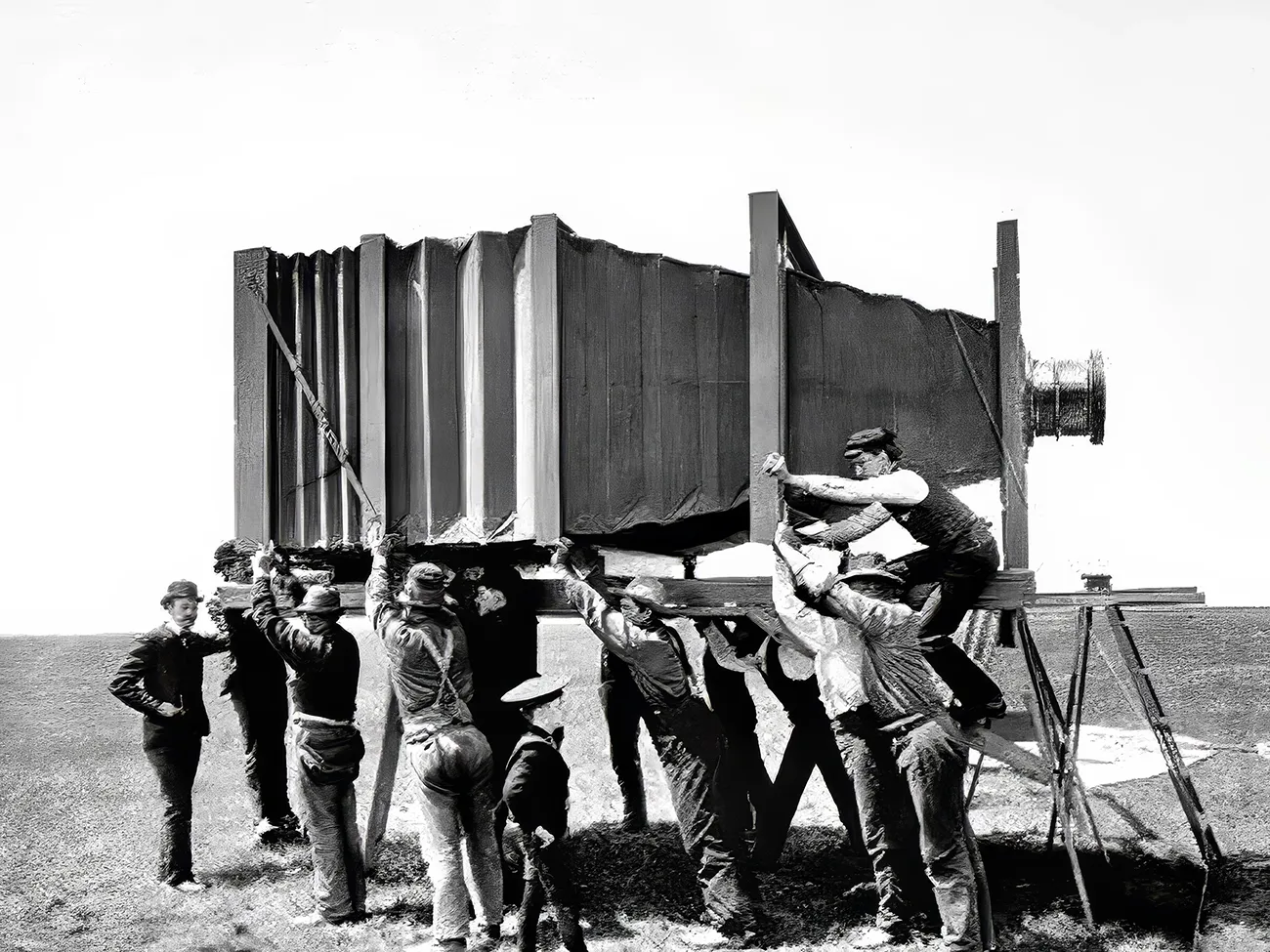
The history of the camera begins with a simple but powerful idea: light can create images. Long before modern cameras were invented, ancient people noticed that light passing through a small hole into a dark room could project an image of the outside world onto a wall. This early concept became the foundation of photography.
The earliest known form of the camera was the Camera Obscura, a Latin term meaning “dark room.” It was first described by the Chinese philosopher Mozi in the 5th century BCE and later explained by the Arab scientist Ibn al-Haytham (Alhazen) in the 11th century. He proved that light travels in straight lines and showed how images could be projected through a small opening. The camera obscura was not used to take photographs, but artists used it to trace scenes accurately.
The real camera was born when scientists learned how to fix images permanently. In 1826, Joseph Nicéphore Niépce from France created the first permanent photograph using a process called heliography. He placed a metal plate coated with bitumen inside a camera obscura and exposed it to light for several hours. The result was the world’s first photograph, titled View from the Window at Le Gras.
Niépce later worked with Louis Daguerre, who improved the process. In 1839, Daguerre introduced the Daguerreotype, the first practical photographic process. It produced sharp images on silver-coated copper plates and became very popular. However, each image was unique and could not be copied.
Around the same time, William Henry Fox Talbot in England invented the Calotype, which used paper negatives. This was important because it allowed multiple copies of a single image to be made, a key step toward modern photography.
In the late 19th century, photography became simpler and more affordable. In 1888, George Eastman introduced the Kodak camera with the slogan, “You press the button, we do the rest.” This camera used roll film and made photography available to the public, not just scientists and professionals.
From these early inventions, cameras continued to evolve—from film cameras to digital cameras, and now to smartphone cameras. Today, billions of photos are taken every day, but all of them trace their roots back to the first simple camera obscura and the early pioneers who turned light into lasting images.

Author: Utkarsh_bauddh
Hello! I am Utkarsh Bauddh.