Gulsan_gautam
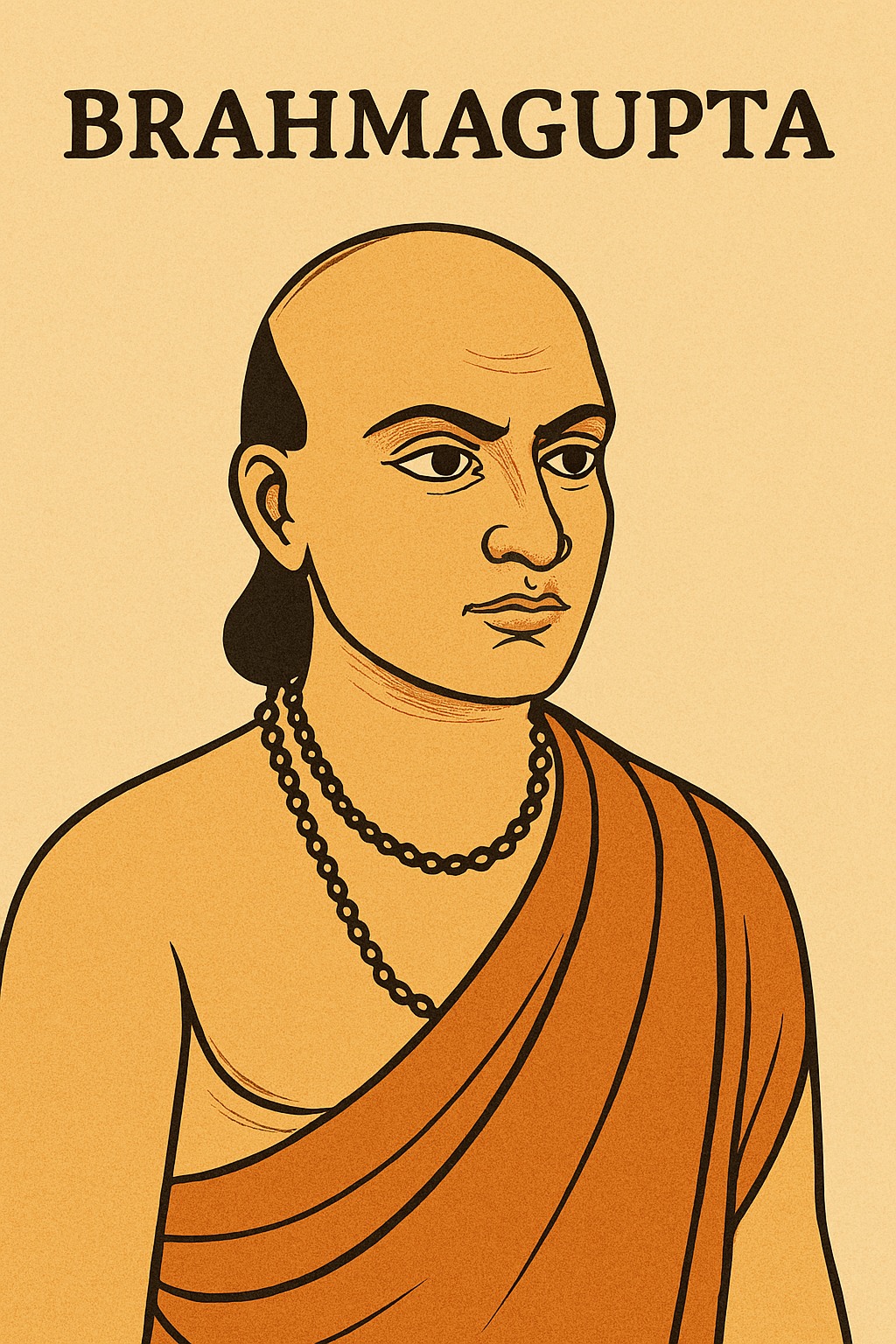
Zero is one of the most important numbers in mathematics. Today, we cannot imagine math, science, computers, or daily calculations without zero. But this powerful number did not always exist. The idea of zero was developed slowly over time, and its full mathematical use was first clearly explained in ancient India.
Early Ideas of Zero
In the beginning, ancient civilizations used numbers only to count objects. They did not feel the need for a symbol for “nothing.” The Babylonians (around 300 BCE) used a blank space and later a symbol to show an empty place in a number, but this was only a placeholder, not a real number. Similarly, the Mayans in Central America also had a symbol for zero, but they did not use it as a full number for calculations.
India and the Birth of Zero as a Number
The true invention of zero as a number happened in India. Indian mathematicians were the first to treat zero not just as an empty space, but as a number that could be used in calculations.
The earliest written evidence of zero is found in the Bakhshali Manuscript, believed to be from the 3rd or 4th century CE. It shows a dot used as a symbol for zero in mathematical problems.
Brahmagupta – The Father of Zero
The Indian mathematician Brahmagupta (born in 598 CE) is known as the first person to clearly define zero as a number. In his famous book Brahmasphutasiddhanta (628 CE), he explained rules for using zero, such as:
Any number plus zero is the same number.
Any number minus zero is the same number.
A number multiplied by zero is zero.
Although he made a small mistake about dividing by zero, his work was revolutionary and became the foundation of modern mathematics.
Spread to the World
From India, the idea of zero traveled to the Arab world through scholars. Later, it reached Europe through translations of Arabic texts. The Italian mathematician Fibonacci helped spread the Hindu-Arabic number system in Europe in the 13th century.
Conclusion
So, while no single person “invented” zero instantly, India is the birthplace of zero as a real number, and Brahmagupta is the mathematician who gave it proper rules. Zero changed the world forever and became the backbone of modern science, technology, and mathematics.

Author: Gulsan_gautam
I am gulsan gautam.