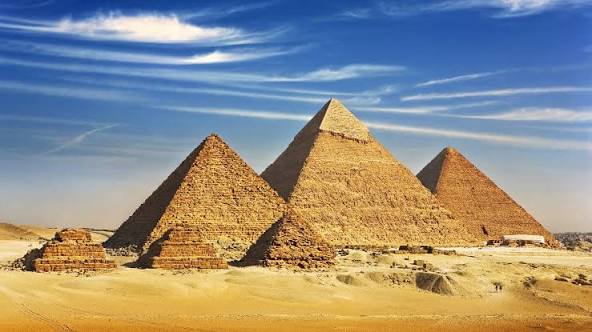
Pyramids stand among the most iconic architectural creations in human history. Their triangular silhouettes evoke ancient civilizations, mysterious rituals, advanced engineering, and a profound desire to preserve memory across time. Although the Egyptian pyramids are the most famous, pyramids were built in many cultures around the world—Egypt, Sudan, China, Mesopotamia, Greece, India, Mesoamerica, and even medieval Europe. Each region built pyramids for different purposes, but they all reflect humanity’s shared obsession with power, religion, the afterlife, mathematics, and celestial symbolism.
1. Origins of Pyramidal Architecture
1.1 Prehistoric Symbolism
The pyramid shape existed long before the first stone pyramid was constructed. Early humans noticed that this triangular form appeared naturally in mountains, hills, volcanoes, and even anthills. The shape suggested stability, permanence, and connection between earth and sky.
Ancient communities often created mounds of earth for burials or rituals. These mounds gradually evolved into more geometric shapes. Archaeologists have discovered stepped earthen mounds dating back to 3000–4000 BCE in regions such as:
- Eastern Europe
- Mesopotamia
- The Indus Valley
- Peru
- North America (mound-building cultures)
These early structures laid the conceptual foundation for future pyramid building.
1.2 Spiritual Meaning
The pyramid shape was associated with:
- A sacred mountain where gods lived
- A ladder or “stairway to heaven”
- The sun rising and setting
- The cosmic axis connecting worlds
Different cultures independently developed pyramids because the shape seemed naturally connected to spiritual and cosmic ideas.
2. The Egyptian Pyramids – Rise of a Monumental Tradition
No history of pyramids can begin without Egypt, where pyramid construction achieved unmatched scale, perfection, and symbolism.
2.1 Early Burials and the Mastaba
Before true pyramids, Egyptians buried their elites in mastabas—rectangular, flat-roofed mudbrick structures. These date back to around 3500 BCE. A mastaba provided a stable base, which later developed into stepped and then smooth pyramids.
2.2 The First Pyramid: Djoser’s Step Pyramid (c. 2667 BCE)
Designed by the brilliant architect Imhotep, the Step Pyramid at Saqqara is considered the world’s first large stone monument. Imhotep stacked six mastabas on top of one another, creating a massive structure over 60 meters tall.
Key innovations:
- Use of cut stone blocks
- Complex underground chambers
- Introduction of monumental scale architecture
- Establishment of the pyramid as a royal tomb
The Step Pyramid also represented a divine stairway, helping the king ascend to the afterlife.
2.3 Experimental Phase: The Bent and Red Pyramids
Pharaoh Sneferu, the father of Khufu, experimented heavily:
- The Bent Pyramid (Dahshur): The angle changes halfway up. Possibly due to engineering miscalculations, but still a major achievement.
- The Red Pyramid: The first successful true smooth-sided pyramid.
Sneferu’s reign marks the transition from stepped pyramids to the classic triangular shape recognized worldwide.
2.4 The Great Pyramid of Giza (c. 2580 BCE)
Commissioned by Pharaoh Khufu, the Great Pyramid stands as one of the greatest engineering feats in history.
- Height: 146.6 meters (original)
- Stones: Over 2.3 million blocks
- Alignment: Perfectly oriented to the cardinal directions
- Precision: Joints measured in millimeters
- Symbolism: The sun’s rays, eternity, cosmic order
The Great Pyramid was part of a complex with temples, smaller pyramids, and the Sphinx. Its construction required advanced mathematics, astronomy, administrative efficiency, and tens of thousands of skilled workers—not slaves, as once believed.
2.5 Middle and Late Kingdom Pyramids
Pyramid quality declined over time due to:
- Economic strain
- Theft of stone blocks
- Political instability
However, the core idea of the pyramid continued symbolically in pharaonic temple architecture.
3. Nubian (Sudanese) Pyramids – A Distinct African Tradition
South of Egypt, the Kingdom of Kush built over 200 pyramids, more than Egypt itself.
3.1 Origins and Influence
The Nubians admired Egyptian culture but developed their own unique style:
- Much steeper angles
- Smaller bases
- Burial chambers beneath the pyramid
- Rich, decorated entrances
Most were built between 700 BCE – 300 CE in cities like Meroë and Napata.
3.2 Purpose
They served as royal tombs and had strong connections to:
- The god Amun
- Warrior kings
- Trade wealth
These pyramids demonstrate Africa’s independent architectural creativity.
4. Mesopotamian Ziggurats – The Earliest Giant Pyramidal Temples
Before Egypt built stone pyramids, Sumerians in southern Iraq built ziggurats, beginning around 3000 BCE.
4.1 What Is a Ziggurat?
A ziggurat is a stepped platform made of mudbrick. Famous examples include:
- Ziggurat of Ur
- Etemenanki (linked to the “Tower of Babel” story)
4.2 Purpose
Unlike Egyptian pyramids (which were tombs), ziggurats served as:
- Temple platforms
- Homes of major gods
- Centers of civic and religious life
4.3 Symbolism
Ziggurats represented the “cosmic mountain” where earth and sky met. People believed gods descended to the top to meet priests.
5. Chinese Pyramids – Imperial Tombs
China has hundreds of pyramid-shaped burial mounds, especially in Shaanxi province.
5.1 Early Tomb Mounds
The earliest date to the Neolithic era, but true large pyramids emerged around 200 BCE.
5.2 The Mausoleum of Qin Shi Huang
The first emperor of China, builder of the Great Wall, created:
- A massive pyramid-shaped mound
- The Terracotta Army
- A city-sized underground palace
While Chinese pyramids look like hills today, they were once stepped, flat-topped pyramids.
5.3 Purpose
These pyramids symbolized:
- Imperial power
- Cosmology (heaven and earth)
- Eternal rule
6. Greco-Roman Pyramids
While pyramids are rare in Greece and Rome, a few examples exist.
6.1 Greek Influence
Greek travelers visited Egypt and were fascinated by pyramids. They adopted the triangular form in smaller tombs.
6.2 The Pyramid of Cestius (Rome)
Built around 12 BCE, this pyramid was inspired by Egypt after Rome conquered it.
Characteristics:
- Sharp angle
- Marble covering
- Tomb of a wealthy Roman magistrate
It demonstrates cultural exchange across the Mediterranean world.
7. Indian Pyramids – Temples, Stupas, and Stepwells
India did not build burial pyramids, but many structures follow pyramidal geometry.
7.1 Stupas
Early stupas (like Sanchi) form a dome on a stepped base, which is conceptually pyramidal.
7.2 Hindu Temples
South Indian Dravidian temples use pyramidal towers:
- Vimanas and Gopurams
- Built in stepped layers
- Represent the cosmic mountain Meru
Examples: Brihadeeswarar Temple, Meenakshi Temple.
7.3 Stepwells
Architecturally, stepwells in Gujarat and Rajasthan resemble inverted pyramids.
8. Mesoamerican Pyramids – Divine Mountains of the New World
Some of the greatest pyramids in history were built in Mexico, Guatemala, Belize, and Peru.
8.1 Olmec Beginnings
The Olmecs (1200–400 BCE) created the earliest pyramid platforms in the Americas.
8.2 Teotihuacan – The City of Pyramids
Teotihuacan (c. 100 BCE – 550 CE) housed enormous pyramids:
- Pyramid of the Sun
- Pyramid of the Moon
- Temple of the Feathered Serpent
These were used for religious rituals, processions, and sacrifices.
8.3 Maya Pyramids
Mayan cities like Tikal, Palenque, and Chichen Itza built stepped pyramids aligned with astronomical events.
Most famous: El Castillo (Temple of Kukulcán)
On equinox days, a shadow serpent “descends” the steps.
8.4 Aztec Pyramids
The Aztec capital Tenochtitlan had the Templo Mayor, a double pyramid dedicated to gods of war and rain.
Many pyramids were destroyed by Spanish conquistadors.
8.5 Andean Pyramids
In Peru, cultures like Caral and Moche created huge stepped pyramids thousands of years before the Inca Empire.
9. European Pyramids
9.1 Bosnia Controversy
Claims of Bosnian pyramids exist, but most archaeologists consider them natural hills.
9.2 Medieval Memorials
Some medieval European monuments mimic pyramid shapes but are not tombs.
10. Islamic and Medieval Architecture
Islamic architects did not build pyramids as tombs (burial architecture is simple in Islam), but they used pyramidal domes, minarets, and ziggurat-inspired forms.
Examples include Fatimid tombs and Mughal chhatris.
11. Modern Pyramids
Pyramid architecture continues even today:
11.1 The Louvre Pyramid (Paris)
Built in 1989, it blends modern glass engineering with ancient symbolism.
11.2 Las Vegas Luxor Hotel
A gigantic light-beaming pyramid replicating Egyptian glamour.
11.3 Memorials and Museums
Examples:
- Holocaust Memorial (Israel)
- Muttart Conservatory (Canada)
- Slovak Radio Building
Modern architects use pyramids for their stability, symbolism, and aesthetics.
12. Why Did So Many Civilizations Build Pyramids?
Despite no contact between many of these cultures, pyramids appear globally. Reasons include:
12.1 Structural Stability
A pyramid is the most stable large structure possible. It distributes weight evenly and rarely collapses.
12.2 Religious and Cosmic Beliefs
People believed pyramids connected humans with:
- Gods
- Stars
- Spirit worlds
- The sun
12.3 Monumental Power
Rulers used pyramids to display:
- Wealth
- Authority
- Technological skill
- Divine right
12.4 Mathematic and Astronomical Use
Pyramids often align with:
- Solstices
- Equinoxes
- Star constellations
- Cardinal directions
12.5 Human Psychology
The shape is simple, eternal, and visually powerful.
13. Construction Techniques Across Cultures
13.1 Egyptian Techniques
- Skilled labor, not slaves
- Copper tools, stone hammers
- Ramps (straight, zigzag, circular)
- Precise surveying and astronomy
13.2 Mesoamerican Methods
- Terraced layers
- Volcanic stone and limestone
- Stucco finishing
- Alignments based on calendars
13.3 Chinese and Nubian Techniques
- Earthen core, stone exterior
- Subterranean chambers
- Ritualized burial goods
14. Religious and Philosophical Meanings
14.1 Egyptian Beliefs
Pyramids were “machines for resurrection.” The shape represented the Benben, the sacred mound of creation.
14.2 Mesoamerican Cosmology
Pyramids were “holy mountains” where gods created the world.
14.3 Asian Symbolism
Indian and Chinese pyramids represent cosmic geography—Meru or the steps to heaven.
15. The Decline of Pyramid Building
Reasons include:
- Changing religious systems
- Cost and resources
- Invasions and political shifts
- New architectural styles
By the late ancient world, pyramid construction had largely faded except in Mesoamerica.
16. The Legacy of Pyramids
Today, pyramids remain:
- Zen-like symbols of harmony
- Icons of ancient engineering
- Tourist attractions
- Inspirations for art, architecture, and popular culture
- Mysteries inviting new research
Modern scanning technologies continue revealing hidden chambers, tunnels, and secrets.
Conclusion
The history of pyramids is a story of human imagination, spiritual aspiration, and architectural genius. From the sands of Egypt to the jungles of Mexico, from Chinese imperial mounds to Indian temple towers, the pyramid has served as a bridge between earth and heaven, life and death, memory and eternity. Although thousands of years separate these cultures, their pyramids speak a universal language of power, faith, and cosmic wonder.
