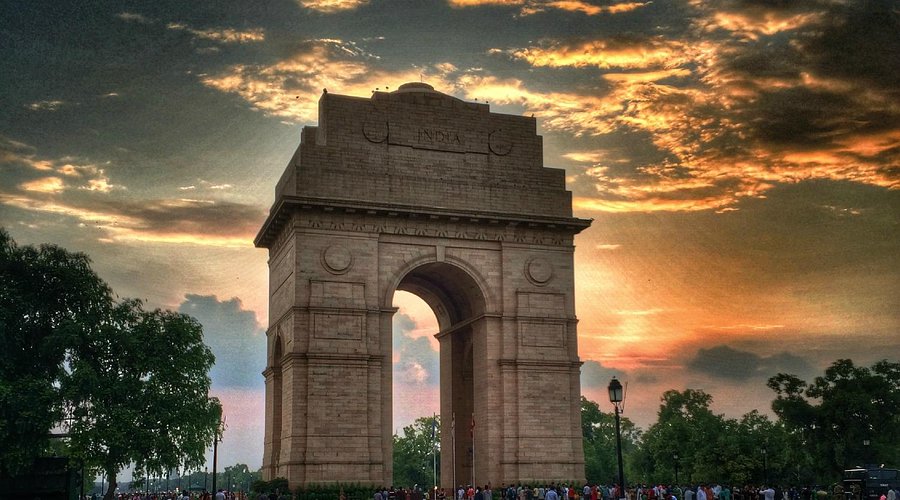
India Gate, located in New Delhi, is one of the most iconic architectural landmarks of India. Designed by the British architect Sir Edwin Lutyens, its structure reflects the classic style of triumphal arches found in Europe, yet carries a distinct Indian identity. The monument was built to honour the 84,000 Indian soldiers who lost their lives during World War I and the Afghan Wars. Their names are inscribed on the surface of the memorial, giving the structure both emotional and historical significance.
Architecturally, India Gate is made of yellow sandstone, which gives it a warm and dignified appearance. The monument stands 42 metres high and is shaped like a monumental arch, similar to the Arc de Triomphe in Paris. Its design follows simple, clean lines without excessive decoration, which is a key characteristic of Lutyens’ architectural style. The arch has a large central opening, through which the sky is visible, creating a sense of openness and grandeur.
The base of the structure is broader, providing strong support to the tall arch. At the top of the arch, the word “India” is inscribed on both sides in bold capital letters. Just below this inscription, there is a stone canopy that once housed a statue of King George V, though the statue was later removed after independence.
Surrounding the monument is a large circular area known as the “Call of Duty” zone, which adds to the memorial’s solemn atmosphere. At night, India Gate is beautifully illuminated, highlighting its architectural form and making it a major tourist attraction.
Overall, India Gate’s architecture combines strength, simplicity, and elegance, symbolizing honour, sacrifice, and national pride.
