Introduction
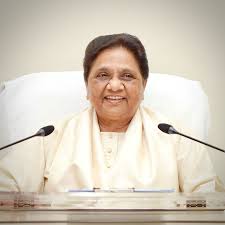
Mayawati is one of the most influential and controversial political leaders in modern Indian history. She is best known for her strong advocacy of Dalit rights, social justice, and equality. Rising from a humble background, Mayawati broke several social and political barriers to become the Chief Minister of Uttar Pradesh four times. Her journey from a modest family to the highest levels of political power represents a significant transformation in Indian democracy. She is not only a politician but also a symbol of empowerment for marginalized communities.
Early Life and Background
Mayawati was born on 15 January 1956 in New Delhi, India. She belonged to a Dalit family, specifically the Jatav community, which historically faced social discrimination and exclusion. Her father, Prabhu Das, worked as a government employee at the Indian Posts and Telegraphs Department. Her family lived a simple life, emphasizing education and discipline.
From an early age, Mayawati was deeply influenced by the teachings of Dr. B. R. Ambedkar, the chief architect of the Indian Constitution and a leader of Dalit emancipation. Ambedkar’s ideas of social equality, dignity, and constitutional justice shaped her worldview and political ideology.
Education and Early Career
Mayawati was a bright student and pursued higher education seriously. She earned a Bachelor of Arts (B.A.) degree from Kalindi College, Delhi University. Later, she completed a Bachelor of Education (B.Ed.) and also obtained a Bachelor of Laws (LL.B.) degree.
Initially, Mayawati aspired to become an Indian Administrative Service (IAS) officer. She even worked as a teacher at a government school in Delhi while preparing for competitive examinations. However, her life took a decisive turn when she met Kanshi Ram, a social reformer and Dalit leader, who recognized her leadership potential.
Entry into Politics
Kanshi Ram played a crucial role in shaping Mayawati’s political career. He introduced her to active politics and mentored her closely. Under his guidance, Mayawati joined the Bahujan Samaj Party (BSP), a political party founded by Kanshi Ram in 1984 to represent Bahujans—Dalits, Adivasis, Other Backward Classes (OBCs), and minorities.
Mayawati emerged as a powerful orator and organizer. Her speeches strongly criticized caste discrimination and called for political power as the key to social transformation. She believed that true equality could only be achieved when marginalized communities gained control over political institutions.
Rise as a National Leader
In 1989, Mayawati was elected to the Lok Sabha (the lower house of the Indian Parliament) for the first time. This marked her formal entry into national politics. Her assertive style and uncompromising stance on social justice quickly gained attention.
She later served as a Member of the Rajya Sabha (the upper house of Parliament). During her parliamentary career, Mayawati consistently raised issues related to Dalit oppression, social inequality, and constitutional rights.
Chief Minister of Uttar Pradesh
Mayawati’s most significant political achievements came in Uttar Pradesh, India’s most populous state. She became the Chief Minister of Uttar Pradesh four times:
- 1995 (first term)
- 1997 (second term)
- 2002–2003 (third term)
- 2007–2012 (fourth term)
Her first term in 1995 was historic because she became the first Dalit woman Chief Minister of Uttar Pradesh. This event had immense symbolic importance for marginalized communities across India.
2007 Absolute Majority Victory
The 2007 Uttar Pradesh Assembly Election was a turning point in Mayawati’s career. The BSP won an absolute majority, allowing her to form the government without coalition partners. This victory was remarkable because it was achieved through her innovative social engineering strategy, which brought together Dalits, Brahmins, OBCs, and minorities.
This period marked the peak of Mayawati’s political power and influence.
Administrative Style and Governance
Mayawati’s governance style was known for being strict, centralized, and authoritative. She emphasized law and order and took strong action against criminal elements. Her supporters praised her for providing stability and administrative discipline, while critics accused her of authoritarianism.
She implemented several welfare schemes aimed at improving the lives of Dalits and economically weaker sections. These included housing projects, scholarships, and social security programs.
Monuments and Symbolism
One of the most debated aspects of Mayawati’s tenure was the construction of monuments, statues, and memorial parks dedicated to Dr. B. R. Ambedkar, Kanshi Ram, and other social reformers. Major projects included parks in Lucknow and Noida.
Supporters argued that these monuments restored dignity and historical recognition to marginalized communities who had long been ignored. Critics, however, accused her of wasting public money and promoting a personality cult.
Corruption Allegations
Mayawati’s political career has also been marked by controversies and corruption allegations, particularly related to the Taj Corridor case and disproportionate assets. Several investigations were initiated, but many cases were later dismissed or weakened due to lack of evidence.
Despite legal challenges, Mayawati remained a resilient political figure and continued to lead the BSP.
Ideology and Political Philosophy
Mayawati’s ideology is rooted in Ambedkarism, which emphasizes constitutionalism, social justice, and empowerment through political power. Her famous slogan, “Bahujan Hitay, Bahujan Sukhay” (for the welfare and happiness of the majority), reflects her belief that democracy must serve the oppressed majority.
She strongly opposed caste-based oppression and believed that symbolic representation was essential for psychological and social empowerment.
Role as a Woman Leader
As a Dalit woman leader, Mayawati faced multiple layers of discrimination. Her rise challenged both caste hierarchy and patriarchy in Indian politics. She became an inspiration for millions of women, especially from marginalized backgrounds, proving that leadership was possible despite systemic barriers.
Her success remains rare in a political system dominated by men and upper castes.
Later Political Years
In recent years, Mayawati’s political influence has declined, particularly after poor performances in state and national elections. However, she continues to remain the supreme leader of the BSP and retains a loyal support base among Dalit voters.
Even when out of power, her presence continues to influence political discourse on social justice and representation.
Criticism and Support
Mayawati is a deeply polarizing figure.
Supporters view her as:
- A champion of Dalit dignity
- A symbol of empowerment
- A strong and fearless leader
Critics accuse her of:
- Corruption
- Excessive symbolism
- Lack of inclusive governance
Despite criticism, her impact on Indian politics is undeniable.
Legacy and Significance
Mayawati’s legacy lies in transforming Dalit politics from a movement of protest into a movement of power. She demonstrated that marginalized communities could not only participate in democracy but also govern effectively.
Her life story continues to inspire debates on caste, power, representation, and democracy in India.
Conclusion
Mayawati is more than a politician; she is a historical phenomenon in Indian democracy. Her journey from a modest Dalit household to the Chief Minister’s office reflects the transformative potential of democratic institutions. While her career has seen controversies and criticism, her role in empowering millions of marginalized people remains her greatest contribution.
In the story of modern India, Mayawati stands as a powerful reminder that political power can be a tool for social change.
