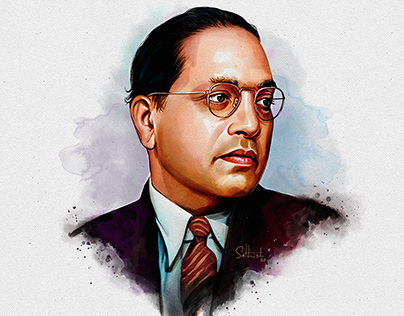
Dr. Bhimrao Ramji Ambedkar played a central and defining role in shaping the Constitution of India. As the Chairman of the Drafting Committee of the Constituent Assembly, he guided the process of transforming India into a modern, democratic, and inclusive republic. His contribution was not just technical; it was ideological, intellectual, and deeply rooted in his lifelong commitment to justice, equality, and human rights.
1. Chairman of the Drafting Committee
Ambedkar was appointed Chairman on 29 August 1947. Under his leadership, the Committee examined various constitutional proposals, studied global constitutions, and ultimately prepared the draft that became the framework of independent India. His expertise in law, political science, and economics made him uniquely qualified for this role.
2. Architect of Social Justice Principles
A major part of Ambedkar’s contribution was embedding social justice at the heart of the Constitution. He strongly advocated for:
- Abolition of untouchability
- Protection of fundamental rights
- Equality before law
- Provisions for social, economic, and political equality
His vision ensured that India would not just be free, but also fair to every citizen.
3. Champion of Fundamental Rights
Ambedkar emphasized the need for enforceable Fundamental Rights, including:
- Right to equality
- Right to freedom of speech and expression
- Right against exploitation
- Right to constitutional remedies
He called the Right to Constitutional Remedies (Article 32) the “heart and soul” of the Constitution because it protects all other rights from violation by the State.
4. Federal Structure With a Strong Centre
Ambedkar shaped India’s federal system, balancing central authority with state autonomy. This design ensured:
- Unity and stability in a diverse nation
- Power distribution across Centre and States
- Flexibility to handle emergencies
He believed a strong centre was essential to maintain national integrity in the early years of independence.
5. Economic and Social Policy Vision
Ambedkar advocated for:
- Land reforms
- Labour rights
- State responsibility for welfare
- Protection of minorities
His economic ideas influenced Directive Principles of State Policy, promoting social welfare and economic democracy.
6. Safeguards for the Depressed Classes
As a lifelong fighter for the rights of the marginalised, Ambedkar ensured:
- Reservation in education and public employment
- Political representation for Scheduled Castes
- Special protections against discrimination
These provisions aimed to reduce centuries-old social inequalities.
7. Defence of the Constitution in the Assembly
Ambedkar delivered several historic speeches explaining and defending the draft Constitution. His powerful arguments convinced many members and shaped the final document. On 26 November 1949, the Constitution was adopted, reflecting his vision of a just and progressive nation.
Conclusion
Dr. B.R. Ambedkar is rightly remembered as the “Chief Architect of the Indian Constitution” because of his decisive leadership, intellectual depth, and unwavering commitment to equality. His contributions helped build a democratic foundation that protects rights, preserves diversity, and promotes justice for every citizen of India.
