Gulsan_gautam
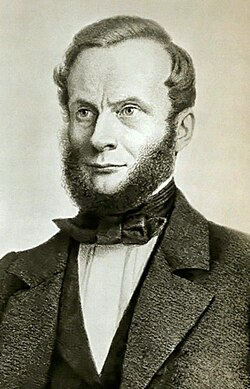
Entropy was discovered and formally introduced by the German physicist Rudolf Clausius in the mid-19th century. The concept emerged from his work on thermodynamics, especially while trying to understand how heat engines work and why some energy is always lost as unusable heat during physical processes.
In 1850, Clausius began studying the relationship between heat and work. At that time, scientists were confused about why heat naturally flows from a hot body to a cold one and never in the reverse direction without external effort. To explain this behavior, Clausius developed the Second Law of Thermodynamics. While refining this law, he realized that there must be a physical quantity that measures the degree of disorder or energy dispersal in a system. In 1865, he named this quantity “entropy,” derived from the Greek word tropein, meaning “to transform.”
Clausius defined entropy in a precise mathematical way. For a reversible process, he stated that the change in entropy is equal to the heat absorbed divided by the absolute temperature. This definition helped scientists understand why some processes are irreversible and why energy systems naturally move toward equilibrium. His work showed that in an isolated system, entropy always increases or remains constant, never decreasing on its own.
Although Clausius introduced entropy, other scientists later expanded and deepened the concept. Ludwig Boltzmann, an Austrian physicist, gave entropy a statistical interpretation. He explained entropy in terms of the number of microscopic arrangements (microstates) corresponding to a system’s macroscopic state. Boltzmann’s famous equation,
S = k log W,
connected entropy with probability and disorder at the atomic level. This made entropy a bridge between thermodynamics and statistical mechanics.
Later, Josiah Willard Gibbs further developed the idea by applying entropy to chemical reactions and phase changes. In the 20th century, entropy was extended beyond physics into information theory by Claude Shannon, where it measures uncertainty or information content.
In conclusion, Rudolf Clausius is credited with discovering and naming entropy, while scientists like Boltzmann, Gibbs, and Shannon expanded its meaning and applications. Today, entropy is a fundamental concept not only in physics and chemistry but also in biology, cosmology, and information science, making it one of the most important ideas in modern science.

Author: Gulsan_gautam
I am gulsan gautam.