Utkarsh_bauddh
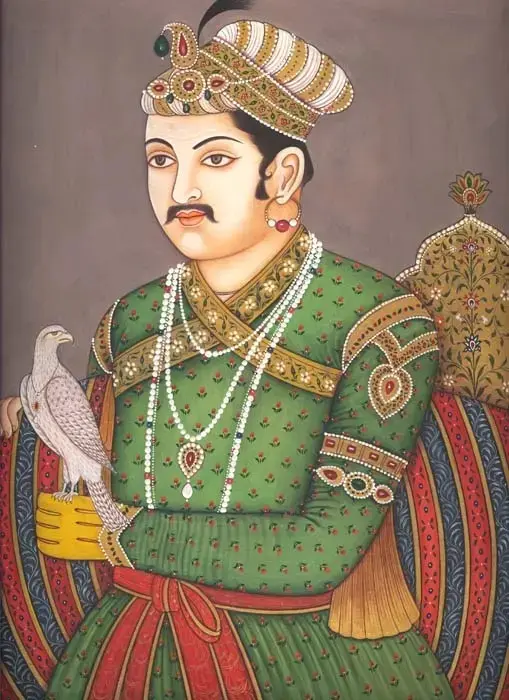
Akbar the Great (1542–1605) was one of the most powerful and successful emperors of the Mughal Empire in India. His full name was Jalal-ud-din Muhammad Akbar, and he was the son of Emperor Humayun. Akbar ascended the throne in 1556 at the young age of thirteen after his father’s death. Because he was very young, the empire was initially governed by his guardian Bairam Khan, who helped him stabilize the kingdom.
Akbar proved to be a brilliant ruler, military leader, and administrator. Through a series of successful military campaigns, he expanded the Mughal Empire across large parts of northern and central India, including regions like Rajasthan, Gujarat, Bengal, and parts of the Deccan. However, Akbar was not only known for warfare but also for his wise governance and strong administrative system. He introduced efficient land revenue reforms that helped farmers and strengthened the economy.
One of Akbar’s greatest qualities was his religious tolerance. At a time when religious conflicts were common, Akbar believed in peaceful coexistence. He abolished the jizya tax on non-Muslims and allowed people of different religions—Hindus, Muslims, Jains, Christians, and others—to practice their faith freely. He invited religious scholars to debates at his court to promote understanding among different communities. Akbar also introduced a new ethical belief system called Din-i-Ilahi, which aimed to unite people through moral values, though it was not widely accepted.
Akbar was a great patron of art, culture, and learning. His court was famous for the Navratnas (Nine Gems), including Tansen, a legendary musician; Birbal, known for his wisdom; and Abul Fazl, his court historian. Architecture also flourished during his reign, with magnificent structures like Fatehpur Sikri and Agra Fort.
Akbar ruled for nearly 49 years and passed away in 1605. He is remembered as one of the greatest emperors in Indian history, admired for his leadership, justice, and vision of unity and harmony in a diverse society.

Author: Utkarsh_bauddh
Hello! I am Utkarsh Bauddh.